Most back pain, including herniated discs and sciatica, improves without surgery. Herniated disc material shrinks on its own in most cases, staying active beats bed rest in controlled trials, and randomized trials show equal 1-year outcomes for most sciatica treated with or without an operation. Physio+ doctors of physical therapy build the plan: most patients measure real progress inside 6 weeks.
Usually, yes. Herniated disc material shrinks or vanishes on follow-up imaging in most people: a 2015 systematic review found the largest herniations reabsorb most often, up to 96 percent for sequestered fragments. And in a landmark randomized trial of 283 sciatica patients, the group treated without surgery had caught the surgical group by 1 year.
A herniated disc sounds like structural failure, something torn that stays torn. Discs do not behave that way. They are living tissue with a healing response, and the extruded material behind most sciatica is exactly the kind the immune system clears over months. The phrase on your MRI report is a snapshot, not a forecast.
The report language deserves translation too. In a review of imaging studies on people with no back pain at all, disc bulges appeared in 30 percent of pain-free 20 year olds and 84 percent of pain-free 80 year olds. Degeneration, bulge, protrusion: these words describe common features of working spines at every age, and they correlate with pain far more weakly than they read. What predicts your recovery is not the picture. It is how your symptoms respond to movement, which is exactly what we test.
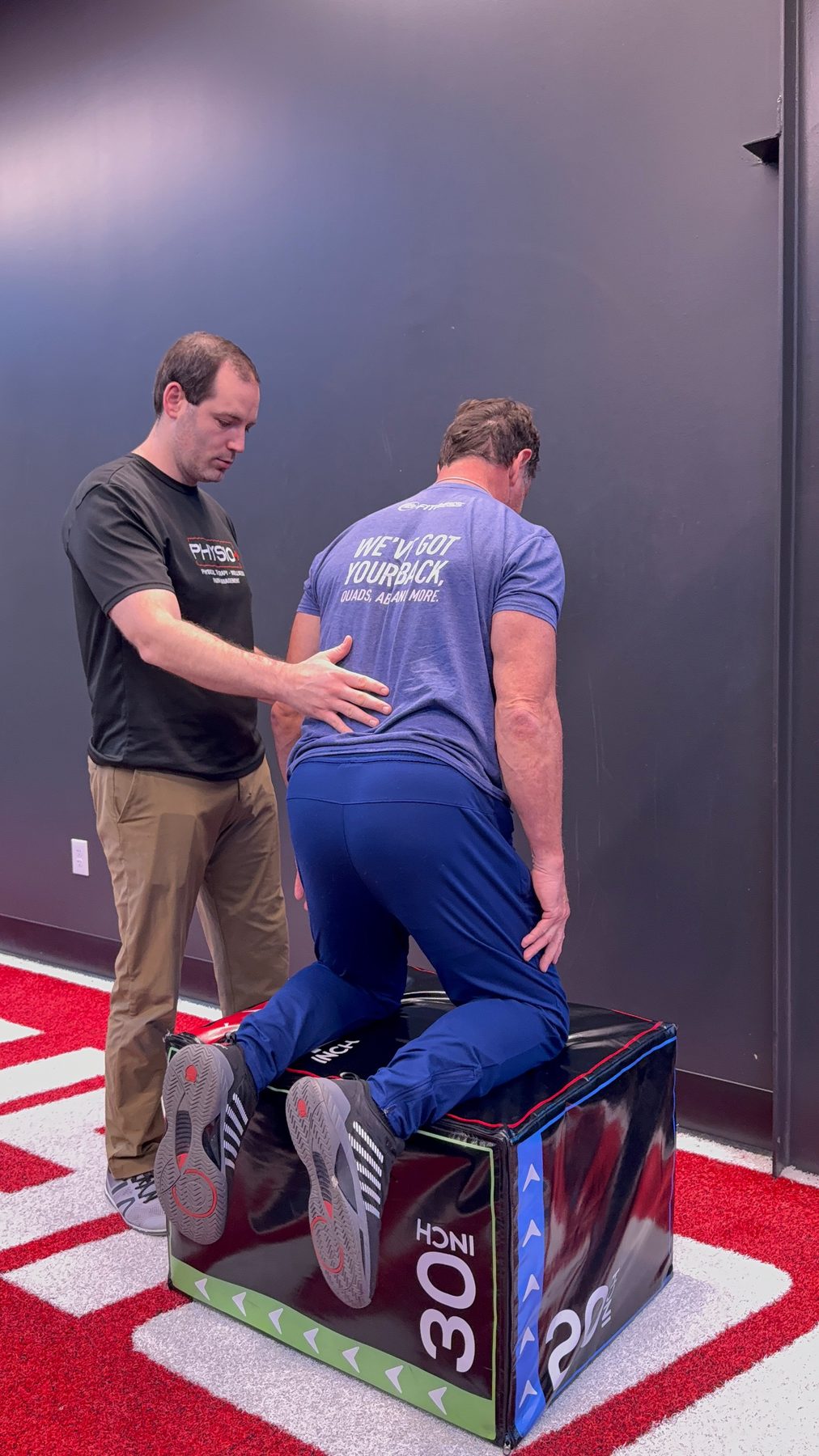
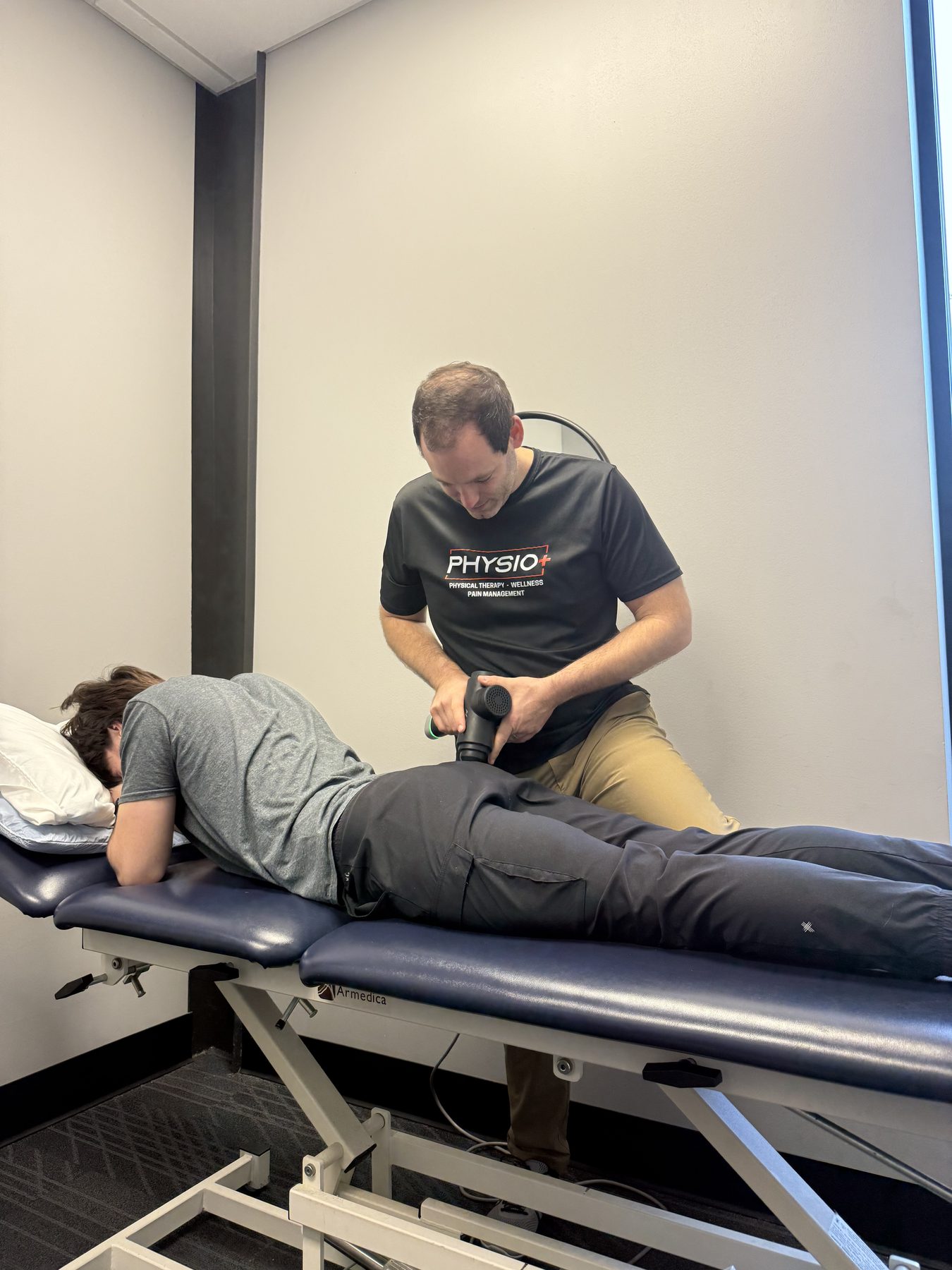
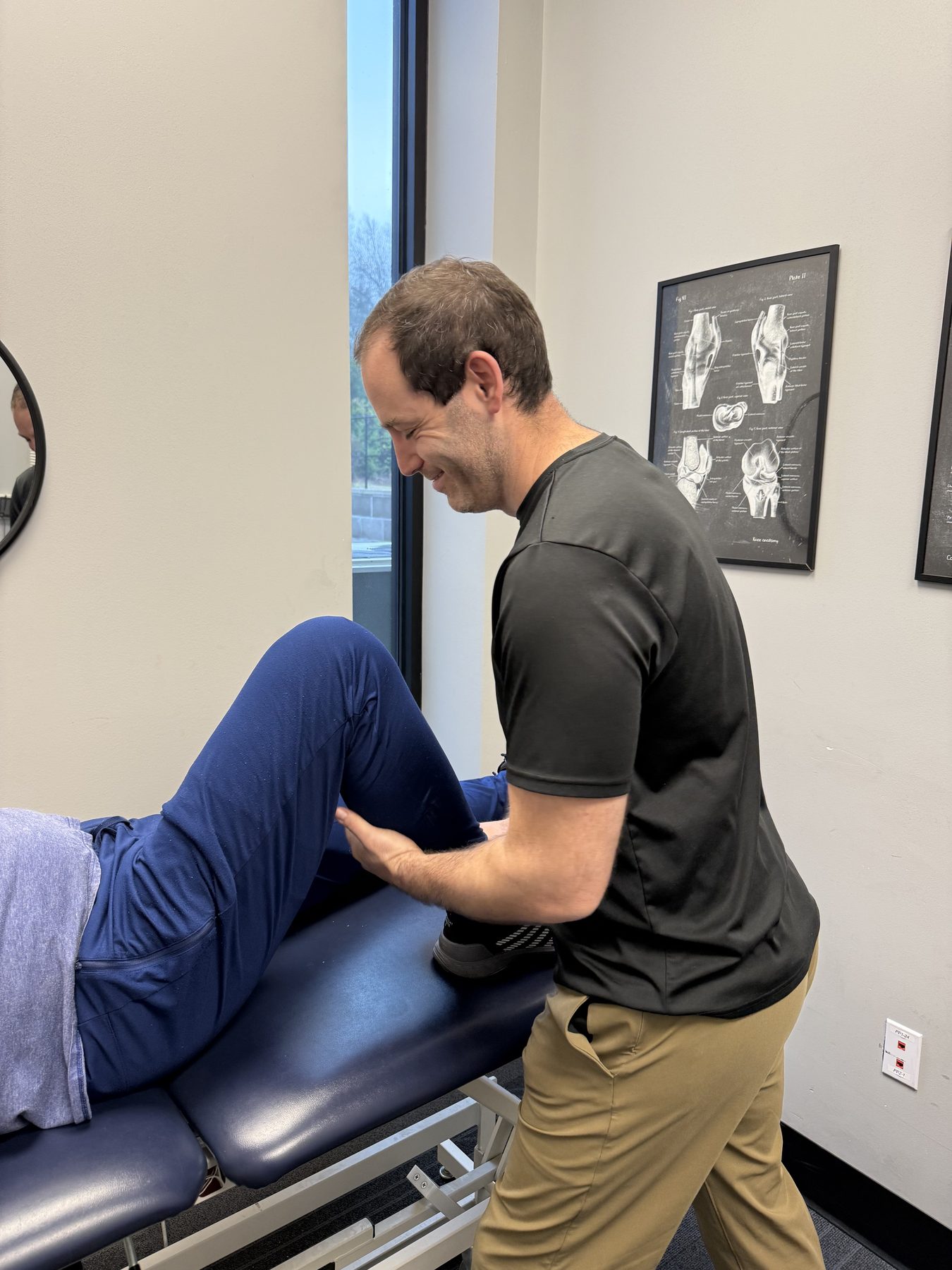
A Physio+ back evaluation takes 60 minutes with a doctor of physical therapy. We screen red flags, test which directions of movement calm your symptoms and which provoke them, then build around graded loading, manual therapy for the stiff segments, dry needling for guarded muscle (our write-up on needling for back pain covers what it feels like), and Physio+ Adjustments where manipulation is indicated. If your disc is the driver, start with our guides to why stretching a disc bulge can backfire and the 5 positions that unload it. This page is the map. Those are the deep dives.
Most sciatica improves substantially inside 6 to 12 weeks, and many flares settle in under 6. Reviews of the natural course put the odds firmly on recovery without surgery. The catch: it usually passes is not a plan, because the version that lingers is almost always the one managed with rest alone.
First, what sciatica actually is. Patients use the word for almost any pain running down the leg, and that is fine, but clinically it means an irritated nerve root in the low back sending pain, tingling, or numbness along the sciatic path. Plenty of leg pain is not nerve at all: the SI joint, the hip, and the hamstring all refer pain down the leg and all respond to different treatment. Sorting that out is the first 20 minutes of the evaluation, and it is why two neighbors with identical sciatica can need opposite programs.
What stalls recovery is predictable: total rest, marathon sitting, and fear of bending. An irritated nerve needs blood flow and glide, and it gets both from rhythmic, moderate movement. What speeds recovery is equally predictable: a daily walking quota, movement in your tested direction preference, and a sleep setup that stops re-poking the nerve at 2 a.m.
The exercise progressions we reach for most are laid out in our guide to back pain exercises that actually hold. And when time alone is not the plan, your exam tells us early: numbness that spreads, a foot that starts dragging, or weakness that grows week over week moves you to the red flag pathway below, not to another month of waiting.
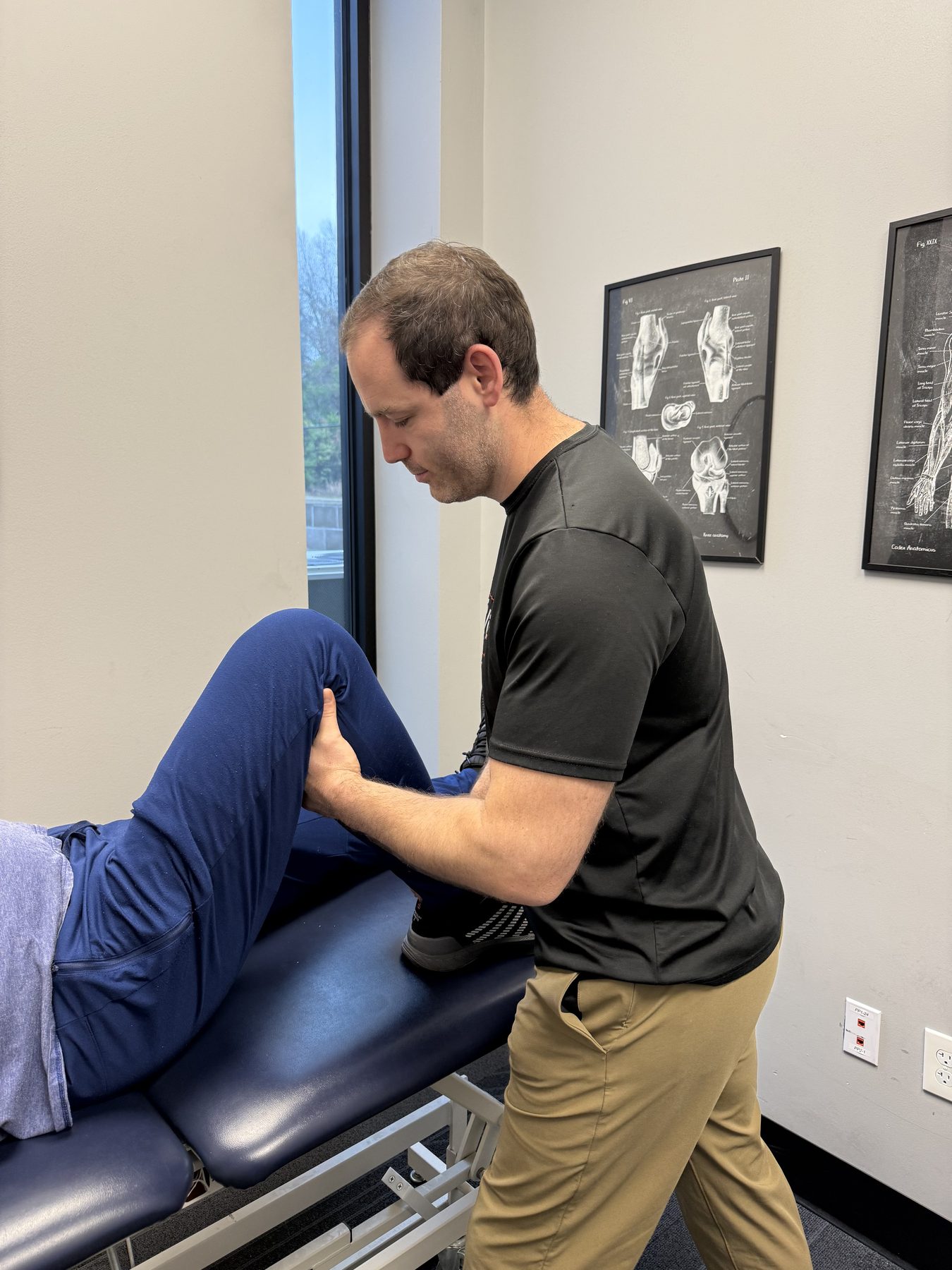
Keep moving. A Cochrane review comparing bed rest against advice to stay active found the active group had less pain and better function, for both back pain and sciatica. Movement is not the risk. Deconditioning is. The skill is dosing movement so it calms the system instead of poking it.
Here is the spiral we interrupt most often. Your back goes out on a Tuesday, lifting something ordinary. It is frightening, so you brace, breathe shallow, and park yourself on the couch. By Friday the spasm has calmed but everything around it is stiffer and weaker, so the first real movement flares it again, which reads as proof that movement is dangerous. Three cycles of that and a 2 week strain has become a 3 month problem. The tissue healed. The strategy did not.
The replacement strategy is the next-morning rule. Pick a dose of activity you are confident you could repeat tomorrow, even if that is a 10 minute walk on flat ground. If the next morning is the same or better, hold the dose for a few days and then add roughly 10 percent. If the next morning is clearly worse and stays worse past midday, yesterday was too big. That single rule replaces most of the guesswork that keeps people stuck.
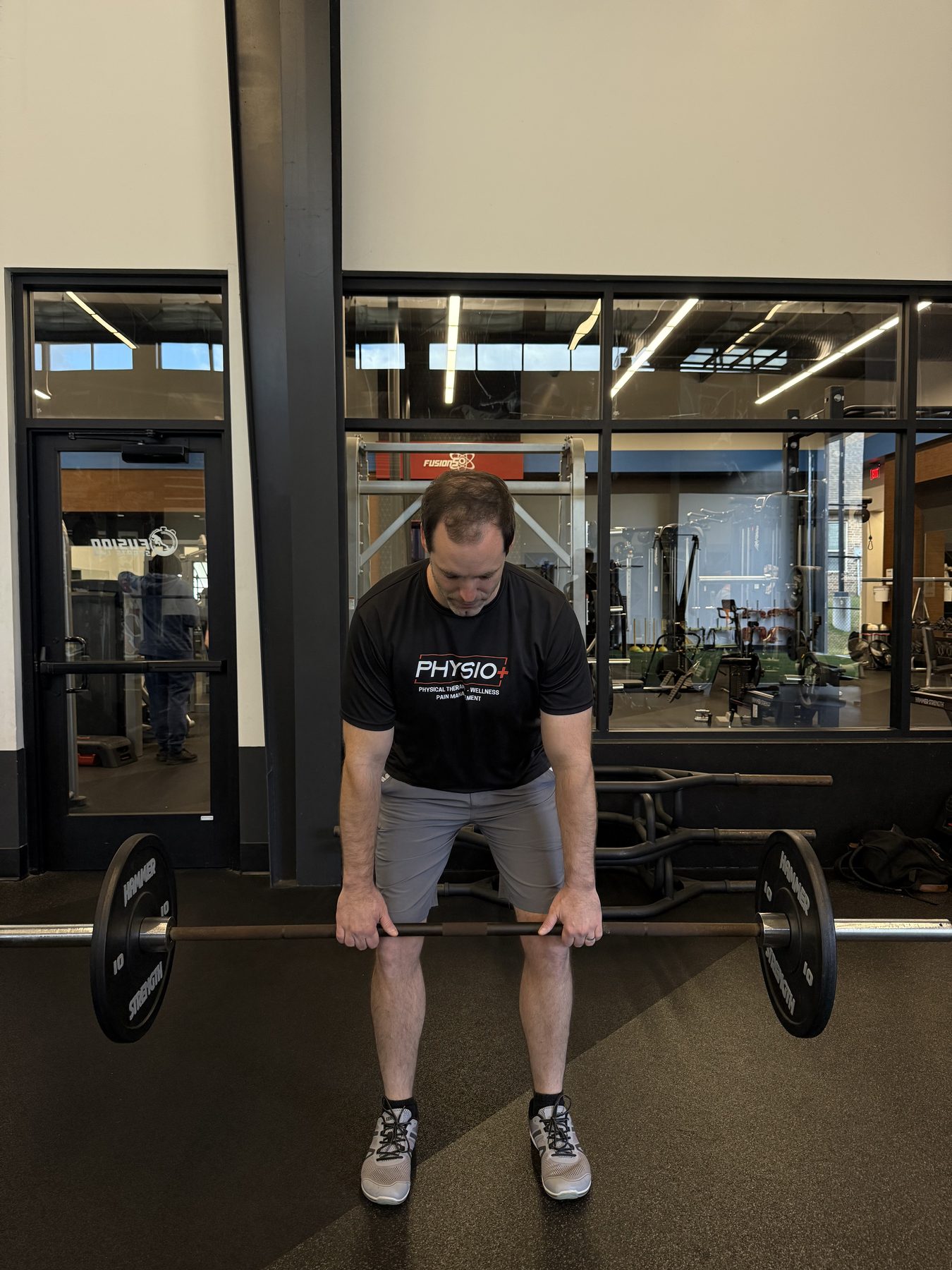
Two groups get their own playbooks. Desk workers: sitting is not dangerous, but unbroken sitting is a dose problem, and our guide to work from home back pain covers the setup and the interruption schedule. Lifters: you do not stop deadlifting, you rebuild the hinge, and our deadlift protection guide shows the progression we use in the gym.
Back pain is a category, not a diagnosis. These are the patterns we see most in Lindale and Tyler, in the language patients actually use for them.
The slipped disc of family vocabulary. Disc material presses near a nerve root and produces back pain, leg pain, or both, often worse with sitting and bending. Most heal without surgery, and the largest herniations reabsorb most reliably. The pattern responds to direction-specific movement and graded loading, and our two disc deep dives linked above cover the details this summary deliberately skips.
Shooting pain, tingling, or numbness following the nerve from the low back into the leg, sometimes all the way to the foot. Usually driven by a disc or a narrowed nerve passage, occasionally mimicked by the hip or SI joint. Most cases improve substantially inside 6 to 12 weeks with active care, and the exam tells us early which ones will not.
A sudden lock-up while lifting, twisting, or reaching for something trivial. It is alarming and it is almost always benign: muscle spasm guarding an irritated joint or disc. Expect 1 to 3 weeks of recovery with movement, far longer with couch rest. We calm the spasm, restore the hinge, and then fix the strength gap that let it happen.
Local, usually one-sided pain that worsens with arching backward, standing for long stretches, or the end of a long drive. The facet joints are the small joints on the back of the spine, and when one gets cranky it guards hard. Mobilization, hip strength, and position breaks settle most cases without injections.
Pain below the beltline, one side, often worse on stairs, single-leg stance, or rolling over in bed. Common in pregnancy and postpartum, and commonly mislabeled as sciatica because it refers pain down the leg. Treatment centers on glute and core strength with hands-on work for the irritated joint, and it responds well once it is correctly named.
The scariest name for the most normal finding. Disc height loss and joint wear appear on nearly every spine over 60, painful or not. The pattern that hurts is morning stiffness that eases with movement and flares with inactivity. Strength is the treatment, dosed the way our chronic pain and arthritis pillar lays out.
Leg heaviness, cramping, or tingling that shows up with walking and eases when you sit or lean forward, the classic shopping cart sign. Driven by narrowing around the nerves, most common after 60. A flexion-biased program plus walking tolerance work expands what you can do, and many patients avoid or delay surgery with it.
Rarely, and the exceptions are specific. Go to an emergency department, not a clinic, for new numbness in the groin or saddle area, new trouble controlling bladder or bowel, leg weakness that is spreading, back pain with fever, or pain after a serious fall or wreck. In Tyler, that means CHRISTUS Trinity Mother Frances or UT Health East Texas.
The first two items describe cauda equina syndrome, a rare compression of the nerve bundle at the bottom of the spine. It is a surgical emergency where hours matter, which is why it leads this list even though most clinicians see only a handful of cases in a career.
Now the reassurance: serious causes are a small minority of back pain seen in primary care, and screening for them is a structured part of every Physio+ intake, not an afterthought. If anything in your story or exam does not fit a mechanical pattern, we refer you the same day and tell you exactly why.
Three phases. Weeks 1 to 2 calm the system and find your direction preference. Weeks 3 to 6 rebuild load tolerance, which is where most patients pass their first re-test. Weeks 7 to 12 return you to lifting, yard work, and sport. Most mechanical cases finish in 6 to 10 visits.
Weeks 1 to 2 are about turning the volume down and taking a baseline. Visits include manual therapy for the guarded segments, dry needling where muscle will not release, and 2 to 3 exercises matched to your tested direction preference, never a printed sheet. You leave with a daily walking quota, a sleep setup, and one number we will re-test: how far you can walk, how long you can sit, or how much you can hinge without payback.
Weeks 3 to 6 are the build. Hinge patterns, loaded carries, and progressive strength work replace the calming work as your tolerance grows, and we re-test the baseline every 2 weeks so progress is measured, not felt around for. Flares still happen in this phase. They are managed with the flare plan you already have, and they change the week, not the trajectory.
Weeks 7 to 12 close the gap between better and back: back under the bar, back on the mower, up the bleachers on a Friday night without planning your exit. Both clinics sit inside working gyms, Fusion in Lindale and B-Fit Tyler at 6421 South Broadway Avenue, Suite 600, so the equipment you finish on is the equipment you keep training on after discharge.
And you do not need a referral to start any of it. Texas direct access (HB 4099) covers up to 30 days of physical therapy care without a physician order. How that works is on our direct access page, or skip ahead and book the $99 audit.
Before we call it disc, facet, SI, or sciatica, we put hands on it and move you through it. Then we build the plan.
No. Clinical guidelines recommend against routine imaging for back pain without red flags, because MRI findings like bulges and degeneration are common in pain-free people at every age. We examine you first and refer for imaging when the exam says a scan would change the plan.
No. Texas direct access law (HB 4099, effective September 2025) allows up to 30 days of physical therapy care without a physician referral. You can book the $99 audit directly. If anything in your exam needs a physician, we refer you the same week.
Most mechanical back pain improves measurably inside 2 to 6 weeks of focused work, and most sciatica settles inside 6 to 12. We set a measurable goal on visit one and re-test it every 2 weeks, so progress is tracked instead of guessed.
Probably not. Serious surgical cases are a small minority of back pain, and randomized trials show equal 1-year outcomes for most sciatica treated with or without an operation. We screen for the exceptions, progressive weakness, cauda equina signs, and trauma, and refer immediately when we find them.
Yes, in doses. Walking loads and unloads the spine rhythmically, keeps the nerve gliding, and staying active beats bed rest in controlled trials. Start with a distance you could repeat tomorrow, keep to flat ground, and shorten the loop during a flare instead of stopping entirely.
Side lying with a pillow between the knees, or on your back with a pillow under them. Both keep the spine near neutral and take tension off the nerve. If one side stings, sleep on the other. Small setup changes often buy the first full night inside a week.
Activity spikes, long unbroken sitting, poor sleep, and stress top the list. A flare does not mean new damage. We chart your pattern in the first 2 weeks, then write a flare plan: what to shrink, what to keep, and when to resume the build.
No. Herniated disc material shrinks over months in most people, and the largest herniations reabsorb most reliably. Pain usually leaves well before the picture changes, which is why we treat your movement and strength instead of chasing the image.
Usually the previous dose was wrong, not the idea. Generic core sheets flare plenty of backs. We test your direction preference and tolerance first, start below that line, and progress by response. If a session flares you, the plan changes that week, not next month.
Book the $99 audit. You leave with a diagnosis, 2 to 3 exercises, and a clear timeline. No referral needed.