In short
The five exercises with the strongest evidence for low back pain are the McGill big three (curl up, side plank, bird dog), the glute bridge, and the hip hinge pattern. They build the spinal capacity and hip engine that most back pain patients lack. Run them five days a week for six weeks and most nonspecific low back pain reduces substantially. At Physio+ in Lindale and Tyler, these are core to every back pain plan. See physical therapy for hands on support.
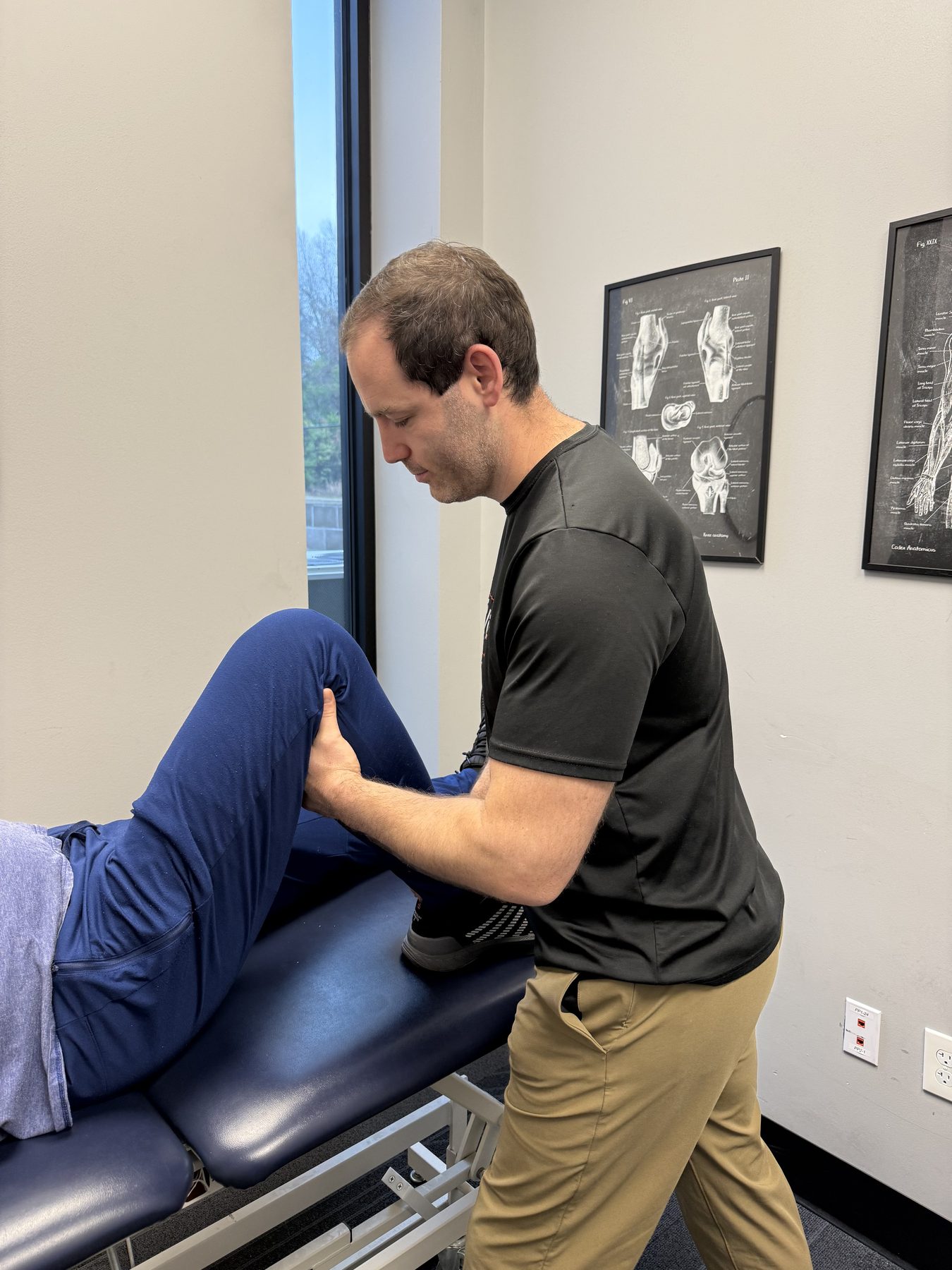
Why these five
Most back pain exercises taught online focus on stretching, which rarely resolves the pattern and often backfires for disc cases (see our guide on stretching and disc bulges). The five below build capacity, which is the missing piece for most chronic and recurrent back pain.
1. Modified curl up (McGill)
On your back. One knee bent, foot flat. Other leg straight. Hands under the low back to preserve the natural curve. Lift your head and shoulders just off the floor. Hold 10 seconds. Lower. Repeat.
Programming. 10 reps, 10 second hold, five days a week. This is a deep core exercise, not a sit up. Trains the abdominal stabilizers without stressing the disc.
2. Side plank (McGill)
On your side, forearm on the floor. Lift the hips. Make a straight line from shoulder to knee (beginner) or shoulder to foot (advanced). Hold 10 seconds. Lower. Repeat.
Programming. 5 reps per side, 10 second hold, five days a week. Trains the lateral core (quadratus lumborum, obliques) that stabilizes the spine.
3. Bird dog (McGill)
On hands and knees. Extend opposite arm and leg. Hold 10 seconds. Return. Alternate. Keep the torso absolutely still.
Programming. 10 reps per side, five days a week. Cross body stabilization that transfers directly to walking and standing.
4. Glute bridge
On your back, knees bent, feet flat. Squeeze the glutes and lift the hips. Hold one second at the top. Lower with control.
Programming. 3 sets of 15, five days a week. Wakes up the glutes, which are almost always underactive in chronic back pain.
5. Hip hinge pattern (unloaded or light kettlebell)
Feet shoulder width. Hands on hips or light kettlebell in front. Push the hips back, letting the torso tip forward while maintaining a neutral spine. Return by driving through the heels.
Programming. 3 sets of 10, five days a week. The hinge is the foundation of every back safe lifting pattern.
How to sequence a week
Do all five every day for six weeks. Total time. 10 to 15 minutes. That is the price of a durable back.
If you miss a day, do not compensate with extra volume. Consistency beats volume.
What to do if pain spikes
- If any exercise produces pain above a 4 out of 10, stop that one.
- Return to a lower intensity version the next day.
- If pain persists more than three days, book an evaluation.
- If symptoms spread (into the leg, foot, or further), stop and get assessed.
When these exercises are not enough
About half of nonspecific low back pain resolves with consistent home work. The other half needs hands on care and a professional diagnosis. See a DPT if.
- Symptoms have been present longer than six weeks.
- Pain is waking you at night.
- You have numbness, tingling, or weakness in a leg.
- Pain is preventing work or normal daily activity.
- You have tried consistent exercise for three weeks and are no better.
Progression beyond the five
Once the five are easy, the next layer includes.
- Loaded hinge (deadlift, kettlebell swing).
- Loaded squat (goblet, then barbell).
- Carries (farmer, suitcase).
- Unilateral lower body work (split squat, step up).
These progressions turn a durable back into a resilient back. At Sport Performance, Cameron Berry builds these directly into loaded programs for patients ready for the next layer.
Frequently asked questions
Can I do these with active pain?
If pain is below a 4 out of 10 and you do not have red flag symptoms, yes, scaled down.
How long before I feel a difference?
Many patients notice less morning stiffness inside a week. Durable change takes four to six weeks.
Are these safe with a disc bulge?
Generally yes, with pain guided dosing. Avoid the curl up if it increases leg symptoms.
Do I need equipment?
A light kettlebell or dumbbell is helpful for the hinge. Otherwise body weight.
What else should I be doing?
Walking, daily. At least 20 minutes.
Book the evaluation
initial evaluation with Tim Hu, PT, DPT, OCS, C-DN. Book online.