Hip
Hinge. Not hunch.
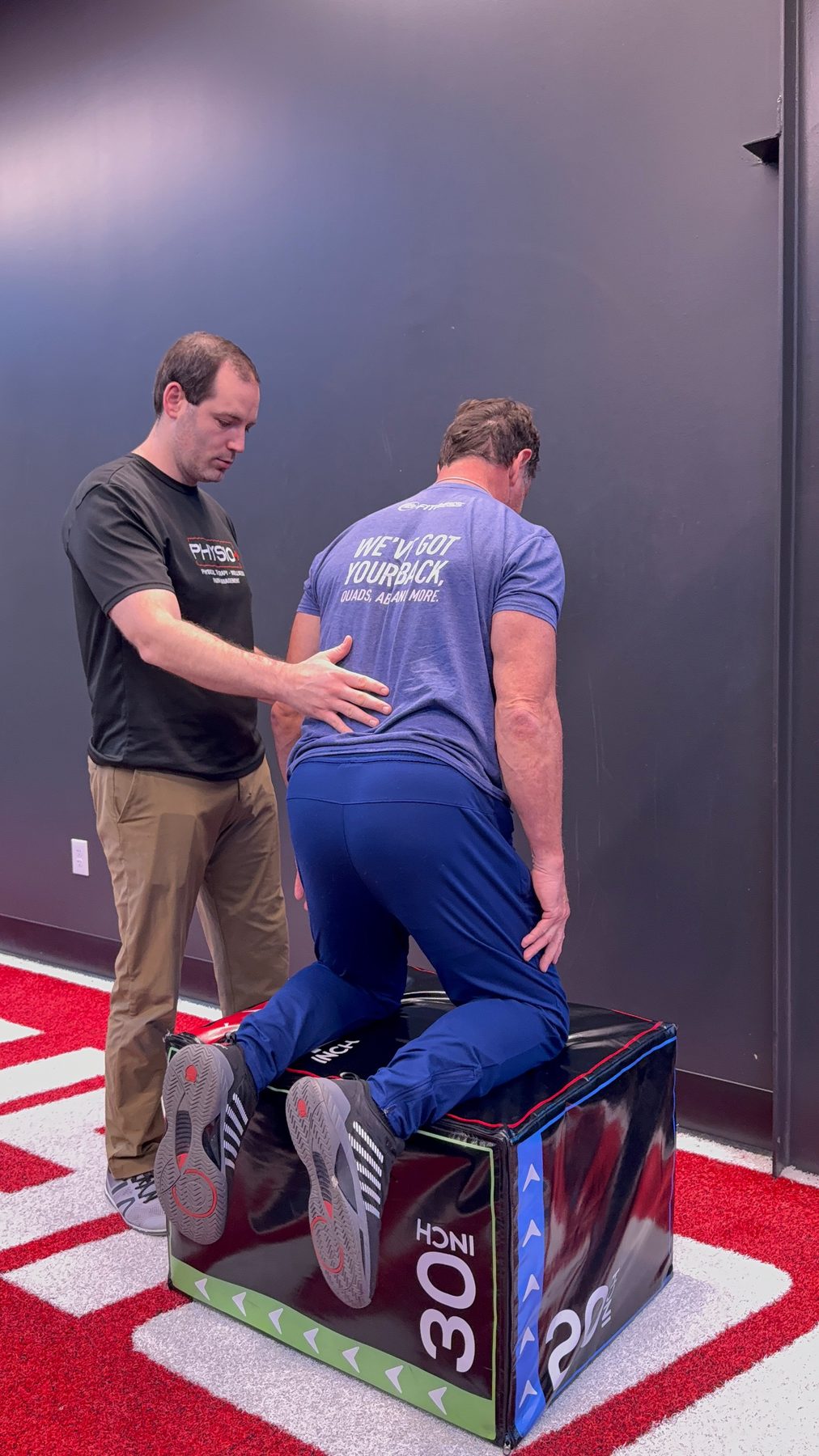
Hip pain is usually a loading problem, not a flexibility problem. We rebuild the hinge, the squat, and the step before we send you back.
Hip pain at Physio+ covers femoroacetabular impingement, labral tears, gluteal tendinopathy, trochanteric bursitis, and post hip replacement rehab. A strength and mobility plan built around true hip mechanics resolves most non surgical cases inside six to ten weeks. Post surgical recovery runs on a protocol coordinated directly with your orthopedic surgeon.
Hip pain rarely comes from the hip joint alone. The most common pattern we see in Lindale and Tyler is weak glutes with a tight hip flexor, producing impingement at the front of the joint and bursitis at the side. Fix the pattern and the joint calms down. True intra articular pathology (labral tears, advanced arthritis, FAI that needs surgery) exists but is less common than the pattern problem.
We start with manual therapy to free the capsule, progressive glute strengthening, and hip flexor mobility work. Dry needling helps for piriformis and gluteus medius trigger points. Cameron Berry handles most of our post operative hip cases.
A Physio+ hip evaluation takes sixty minutes. We range, strength test, screen the lumbar spine, and watch you walk, squat, and hinge. You leave visit one with a pattern diagnosis, two to three exercises, and a plan.
One on one DPT care with a hip mechanics focus, not a generic exercise plan.
Explore NeuromuscularFor trigger points in the gluteus medius, piriformis, and TFL that drive lateral hip pain.
Explore Sport performanceFor runners and lifters who need hip mechanics rebuilt alongside strength and conditioning.
Explore
Hip pain is usually a loading problem, not a flexibility problem. We rebuild the hinge, the squat, and the step before we send you back.
Labral pathology is common on MRI even in asymptomatic people. Most hip pain we see is mechanical and labrum related findings often resolve with pattern correction. We send for surgical consult only when conservative care has failed.
Very few of our hip pain patients end up needing surgery. When they do, we coordinate directly with the orthopedic surgeon and run the post op protocol from day one.
Lateral hip pain is usually gluteus medius tendinopathy or trochanteric bursitis. It responds to progressive glute loading and IT band mobility, not stretching.
Almost always, yes. We modify depth, stance, and load for the acute phase and return you to full range inside six to eight weeks.
Short sessions of hip flexor mobility help. But if glutes are weak, stretching alone will not fix the pattern. Strength is the fix.
Most runners are back to easy miles inside three to four weeks and to full training inside six to ten weeks, depending on mileage.
Book the $99 audit. You leave with a working diagnosis, two to three exercises, and a clear timeline.