Hip
Hinge. Not hunch.
Hip pain is usually a loading problem, not a flexibility problem. We rebuild the hinge, the squat, and the step before we send you back.
Where your hip hurts points to what is wrong. Side of the hip pain that flares at night is usually gluteal tendinopathy, not bursitis, and it responds to loading, not stretching. Groin pinching with squats or long sitting points to hip impingement or the joint itself. Deep buttock ache points to the deep gluteal muscles or the spine. Most hip pain resolves with a targeted strength plan inside 6 to 12 weeks, and education plus exercise has outperformed cortisone injection in randomized trial data.
Because each of those positions loads a different structure, and the one that hurts is pointing at your diagnosis. Side pain lying in bed is usually gluteal tendon. Groin pinching with sitting or squatting is usually the joint or its labrum. Deep buttock ache points to the deep gluteal muscles or the spine.
Hip pain gets dismissed more than any pain we treat: it is just bursitis, it is just age, sleep on the other side. Meanwhile you have quietly stopped doing things. The long walks, the gym, sleeping through the night. The hip also lies about its address, referring pain to the groin, the side, the buttock, and down the thigh toward the knee, which is why guessing at it fails and examining it works.
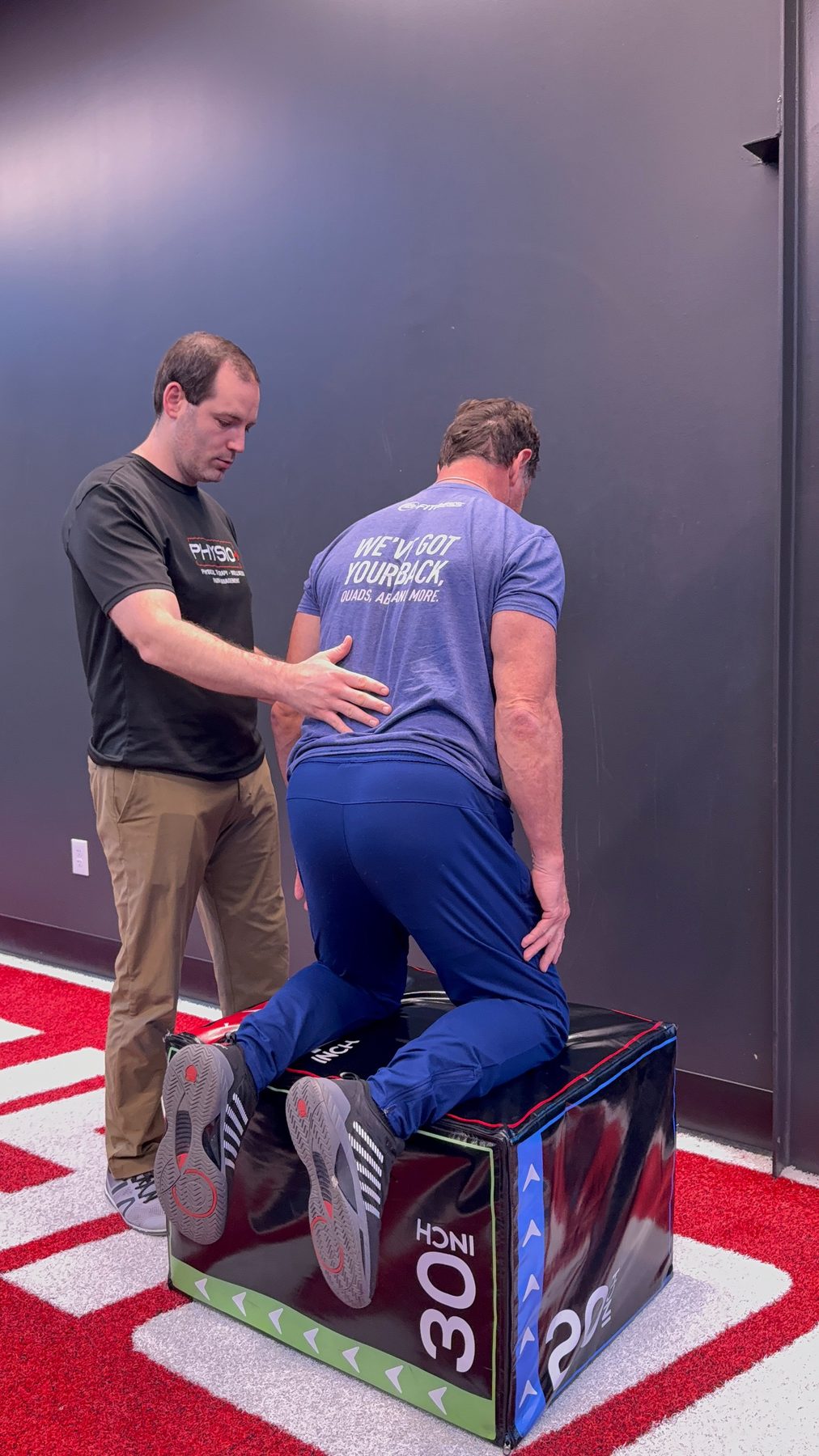
A Physio+ hip evaluation runs 60 minutes with a doctor of physical therapy. We test hip strength in every direction against your other side, screen the lumbar spine because it mimics hip pain constantly, measure rotation range, and watch you walk, squat, and hinge. You leave visit one with a pattern diagnosis, your first 2 to 3 exercises, and a timeline in writing.
One of 6 patterns covers nearly every hip we see. Read the descriptions and you will probably recognize yours. Two or more can coexist, which is common in hips that have hurt for months, and the exam sorts out which one is actually driving your symptoms.
A pinch in the front of the hip or groin at the bottom of a squat, getting out of a low car seat, or after long sitting, most common in active adults under 45. The bone shape gets the blame, but capacity and control decide the symptoms: the UK FASHIoN trial showed structured rehab produces meaningful improvement, so surgery is a choice to earn, not a default.
Pain over the bony point on the side of the hip: worst lying on it at night, climbing stairs, or standing on one leg. This is the most common hip pain in women over 40, and the tendon, not the bursa, usually drives it. In the LEAP randomized trial, education plus exercise beat cortisone injection at 8 weeks, with 77 percent reporting improvement versus 58. The full story sits 2 sections down.
Groin and thigh ache, stiffness after rest, and the quiet loss of shoes and socks range: the hip version of getting old before your time. Exercise has consistent evidence for reducing pain and improving function in hip arthritis, and a strong hip postpones surgical conversations, sometimes indefinitely. Our chronic pain and arthritis page covers the long game of staying active on an arthritic joint.
Clicking, catching, and groin pain that MRI often pins on the labrum, the cartilage rim around the socket. The catch: a blinded study found labral tears in 69 percent of people with no hip pain at all. So the finding alone convicts nobody. We treat the mechanics first, because most labrum related pain settles without arthroscopy, and refer for a surgical opinion when a true mechanical block or failed rehab says so.
A deep, sitting intolerant ache in the buttock, sometimes with sciatic type symptoms down the leg, common in drivers, desk workers, and runners. The deep rotators are usually overworking for weak larger glutes, and the sciatic nerve runs right through the neighborhood. We distinguish it from lumbar referral on exam, then treat with progressive hip strength plus dry needling for the trigger points that keep it lit.
A pulling pain at the front of the hip with sprinting, kicking, or high stepping, familiar to lifters, weekend athletes, and anyone who went too hard at spring sports. The reflex is to stretch it daily, but a hip flexor that always feels tight is usually guarding for weak glutes and a weak anterior chain. Progressive loading fixes what 6 months of stretching could not.
Compression. Lying on your side squeezes the gluteal tendons against the bony point of the hip, and an irritated tendon hates compression above all else. That is why the pain finds you in bed, why crossing your legs aggravates it, and why stretching the side of your hip makes it worse, not better.
This condition spent decades named trochanteric bursitis, and the name did damage: it sent everyone chasing inflammation with rest, ice, and injections. The research reframed it as gluteal tendinopathy, a tendon overload problem where the bursa is mostly a bystander. Overloaded tendons do not want rest. They want carefully dosed strength work and fewer hours spent compressed.
The LEAP trial put the options head to head: education plus exercise, cortisone injection, or wait and see. At 8 weeks, 77 percent of the exercise group reported global improvement versus 58 percent with injection and 29 percent waiting. At one year the exercise group still led. The injection buys quiet weeks. The loading program changes the tendon.
Our plan attacks both sides of the equation. Decompression habits first: a pillow between the knees at night, no leg crossing, no hanging on one hip at the kitchen counter, and no IT band stretching into the painful side. Then progressive gluteal loading 2 to 3 times a week, starting isometric and building to heavy single leg work. Dry needling helps when gluteus medius trigger points amplify the ache, and manual therapy keeps the surrounding hip moving while the tendon rebuilds.
Usually neither surgery nor a life sentence. Labral findings appear on imaging in roughly 7 of 10 pain free adults, so a tear on your report is not automatically your pain source. Arthritic hips respond to strength and mobility work, and surgery remains fully available if you exhaust rehab first.
Trying rehab first costs you nothing except effort. The FASHIoN trial randomized people with hip impingement to arthroscopy or structured conservative care: both groups improved meaningfully, with a modest average edge to surgery. A modest average edge is worth weighing against anesthesia, cost, and months of post op recovery, which is why we think a genuine 12 week block of rehab is the rational first move for most non arthritic hip pain, with hip strength deficits, which are well documented in impingement, as the primary target.
We also know when to stop. Progressive loss of rotation, night pain that no position relieves, X-ray changes matched by collapsing function: that hip has earned a surgical conversation, and pushing more rehab at it wastes your year. We say so plainly, coordinate directly with your orthopedic surgeon, and if replacement or repair goes ahead, we run the rehab protocol from day one so the operated hip actually gets strong instead of just replaced.
A short list, but a non negotiable one. Inability to bear weight after a fall, groin pain in a runner that sharpens with every run or with hopping, a hot swollen hip with fever, constant night pain paired with unexplained weight loss, or new numbness with bowel or bladder changes: each needs a physician or imaging first, not a rehab plan.
Two deserve emphasis. In an older adult, a fall followed by inability to put weight through the leg is a hip fracture until proven otherwise, and that proof happens in an emergency department. In a runner building mileage, deep groin pain that worsens run over run raises the question of a femoral neck stress fracture, one of the few bone stress injuries that can end catastrophically if pushed through. That one stops training the day we suspect it, and imaging happens the same week.
We screen every hip against this list on visit one, and we screen the lumbar spine too, because a back problem wearing a hip costume is one of the most common misdirections in this joint. When something flags, we refer the same week with the exam already documented. When nothing flags, which is most of the time, you hear that clearly and the plan starts immediately.
Week 1 is measurement, spine screening, and calming the irritable hip. Weeks 2 to 6 are progressive glute and hip strength, 2 sessions a week with numbers we retest. Weeks 6 to 12 rebuild your specific demands: the squat, the run, the workday, the night of sleep. You always know what next week holds.
Weeks 1 and 2 set the baseline: strength in every hip direction against your other side, rotation range, single leg control, and a gait check. If the tendon or joint is too irritable to load, manual therapy, positioning changes, and isometric holds bring the volume down first. You leave with 2 to 3 exercises and the compression rules that stop nightly re aggravation.
Weeks 3 to 6 move to the gym floor, at Fusion in Lindale or inside FIT Tyler at 2259 Broussard Street: hip thrusts, split squats, side planks, step ups, loaded honestly rather than waved through. Runners get a treadmill gait check, because a narrow crossover stride quietly overloads the lateral hip on every mile. We retest your strength numbers every 2 weeks so progress is measured, not assumed.
Weeks 6 to 12 aim at your finish line: a full night on your painful side, a pew or a deer stand without the shifting act, easy miles building back to full training, depth restored under the bar. A typical hip runs 8 to 12 visits across the block, front loaded early and spaced out as the home program carries more. We do not book visits your hip does not need.
One on one DPT care with a hip mechanics focus, not a generic exercise plan.
Explore NeuromuscularFor trigger points in the gluteus medius, piriformis, and TFL that drive lateral hip pain.
Explore Sport performanceFor runners and lifters who need hip mechanics rebuilt alongside strength and conditioning.
Explore
Hip pain is usually a loading problem, not a flexibility problem. We rebuild the hinge, the squat, and the step before we send you back.
Maybe, but a tear on MRI is not proof. Labral findings show up in roughly 7 of 10 pain free adults, so the report alone cannot convict the labrum. We treat the mechanics first, because most labrum related pain settles with strength and movement work, and send for surgical consult only when good conservative care has failed.
Very few of our hip patients end up needing one, and exercise has solid evidence for improving pain and function in hip arthritis first. When replacement is genuinely the right move, we help you time it, coordinate directly with the surgeon, and run the post op protocol from day one.
That pattern is usually gluteal tendinopathy, sometimes labeled trochanteric bursitis. Each step asks the gluteal tendons to stabilize your pelvis, and an overloaded tendon complains with exactly that walking, stairs, and lying on it pattern. It responds to progressive glute loading and compression habits, not to stretching.
Almost always, yes. We modify depth, stance width, and load for the irritable phase, because full rest loses the strength your hip needs most. Most lifters return to full range inside 6 to 8 weeks while the underlying pattern gets rebuilt underneath the lifts.
Brief mobility work is fine, but if stretching was going to fix your hip it would have worked by now. A hip flexor that constantly feels tight is usually guarding for weak glutes, and for lateral hip pain stretching can add compression that makes things worse. Strength is the fix.
Most runners are back to easy miles inside 3 to 4 weeks and full training inside 6 to 10 weeks, depending on mileage and how long the hip has been irritated. We keep you running at a modified dose during rehab whenever the tissue tolerates it.
Long sitting compresses the front of the hip and commonly aggravates impingement type pain, but sitting is not damaging you. Vary your position, raise the seat height so hips sit above knees, and break up long stretches. Then build the strength that makes sitting a non event.
No. Texas direct access law (HB 4099, effective September 2025) allows up to 30 days of physical therapy care without a physician referral. Book the initial evaluation directly. If your exam points to fracture, infection, or anything needing imaging, we refer you the same week.
Book the initial evaluation. You leave with a working diagnosis, two to three exercises, and a clear timeline.