In short
Balance declines with age because three systems that keep you upright (vestibular, vision, and proprioception) quietly lose fidelity while the muscles that catch a stumble lose power. The decline is normal. The severity is not. Targeted balance and vestibular therapy restores the system inside six to twelve weeks in most patients over 55. Left alone, the trajectory is toward falls. Caught early, it is reversible.
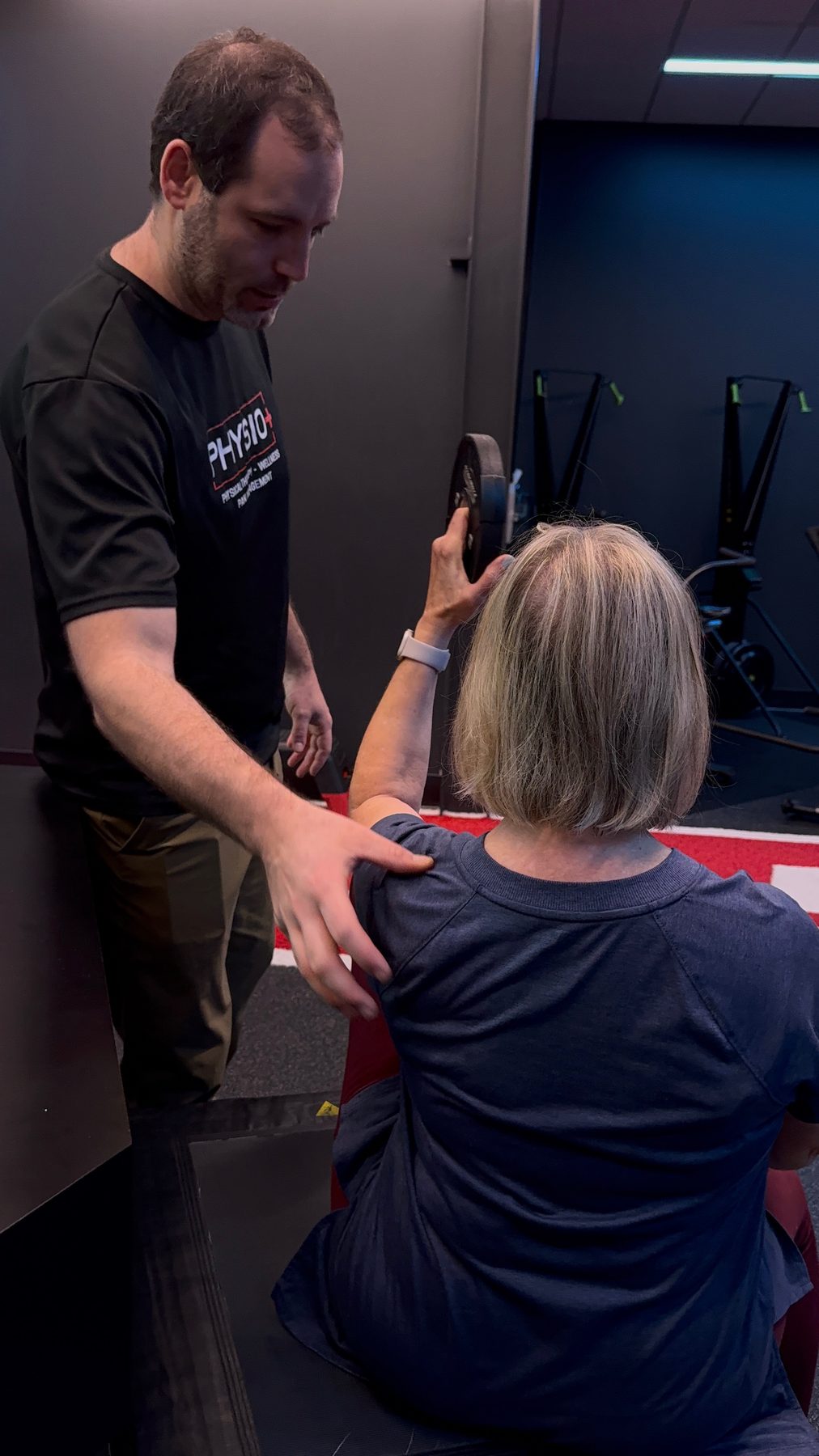
What is actually happening?
Staying upright is a coordination problem your brain solves every second using three inputs: the vestibular system in your inner ears, your vision, and proprioception from your feet and joints. All three lose fidelity with age while the muscles that catch a stumble lose power. The stakes are real. Falls are the leading cause of injury related death among adults over 65 in the United States. Seven specific changes drive the decline, and every one of them is trainable, treatable, or manageable.
The 7 reasons your balance is getting worse
1. Proprioception declines naturally after 50
Nerve endings in your feet, ankles, and hips report where your body is in space, thousands of times per second. Those signals slow with age, and slow further with diabetes, peripheral neuropathy, or simple deconditioning. Your brain receives late, blurry position data and issues late corrections. This is why uneven ground, gravel, and dark rooms feel harder every year. The system still works, it just runs at higher latency.
2. Lower body strength drops every year
Strength falls about 1 percent per year after 40 and closer to 3 percent per year after 70, with the fast twitch fibers that catch a stumble going first. A near trip a 35 year old corrects without thinking becomes a fall when the stabilizing muscles cannot produce force fast enough. This is also the most fixable item on this list. For patients who cannot tolerate heavy resistance, Blood Flow Restriction training at Physio+ builds meaningful strength at very low joint loads, which makes it ideal for older adults and arthritic joints.
3. The inner ear loses sensors, and crystals drift
Three canals in each inner ear detect head motion. The hair cells inside them die off gradually after 40 and the loss accelerates after 65, so the motion data your brain receives gets quieter. Separately, small calcium crystals called otoliths can dislodge and tumble into the canals. That condition is BPPV (benign paroxysmal positional vertigo), and it produces brief, intense spinning triggered by rolling over in bed, lying back, or looking up. BPPV is extremely common after 50 and it is one of the most treatable problems in all of physical therapy. Canalith repositioning resolves most cases in 1 to 3 visits.
4. Vision changes reduce depth perception
Depth perception, low light contrast, and peripheral awareness fade with age. Cataracts, progressive lenses, and slower pupil response each subtract a little more. The balance system leans harder on the other two inputs at exactly the moment they are declining too, which is why night trips to the bathroom are the classic fall scenario.
5. Reaction time slows
Even with perfect sensing, the correction has to arrive in milliseconds. Nerve conduction and central processing slow with age, so the stumble response that used to fire instantly now lands a beat late. The good news: reaction time is trainable. Perturbation drills, where we safely challenge your balance and train the recovery step, are a core part of clinic programming.
6. Inactivity creates a downward spiral
Feeling unsteady leads to moving less. Moving less weakens the legs, dulls proprioception, and shrinks the balance envelope further, which makes you feel less steady still. This loop, not aging itself, is what turns mild decline into serious fall risk within a few years. Breaking it early is the single highest value move in fall prevention.
7. Medications play a bigger role than most people realize
Blood pressure medications, diuretics, antihistamines, sleep aids, and some antidepressants can each contribute to balance problems through dizziness, inner ear effects, or orthostatic hypotension, the blood pressure drop on standing that produces a head rush and a stumble. Taking four or more medications raises fall risk on its own. If your steadiness changed after a prescription change, bring the full medication list to your evaluation. We coordinate with your physician. Do not stop a medication on your own.
The self screen
Do any of the following apply in the past six months?
- You hold onto walls, rails, or furniture more than you used to.
- You feel unsteady on uneven ground, gravel, or stairs.
- You have caught yourself on a counter when standing up from a chair.
- Your head feels foggy or spinny when you roll over in bed or look up.
- You have fallen once in the past year, even a small fall.
- You have begun to avoid activities because of how your balance feels.
Three or more of these is a signal to get evaluated. One fall is the single strongest predictor of a second fall inside 12 months, and the second is statistically more serious.
What you can do at home this week
If the screen is mild and you have no dizziness, start with these three moves. Daily, ten minutes.
1. Single leg stance
Stand near a counter. Lift one foot and balance on the other. Work up to 30 seconds per side. Progress by closing your eyes for a few seconds at a time.
2. Heel to toe walking
Walk a straight line, heel of the front foot touching the toe of the back foot. Twenty steps forward, twenty backward. Keep a wall within arm's reach.
3. Sit to stand
From a firm chair, stand up and sit down without using your hands. Five sets of five. This is the single best strength exercise for fall prevention.
Why home programs stall for many older adults
Home balance work helps the already healthy. It rarely fixes a system that is already failing. The vestibular hair cells, in particular, respond to specific, graded head movement exercises that feel strange and counter intuitive without a clinician guiding the dosing. Generic YouTube routines tend to make vestibular patients worse before better and most quit.
At Physio+, vestibular and balance cases are seen by Logan Merritt, PT, DPT, NCS, CDN, our Board Certified Neurological Clinical Specialist. The NCS credential is held by fewer than two percent of US physical therapists.
Can balance really be retrained after 70?
Yes, and this is the most documented good news in fall prevention. The balance system stays plastic for life. When the inner ear loses sensors, the brain can be trained to weight vision and proprioception more effectively, a process called vestibular compensation, and it responds to structured exercise at 75 the same way it does at 45. Strength responds too: older adults in progressive resistance programs reliably build measurable leg strength within 8 to 12 weeks. What changes with age is not whether training works. It is how precisely the program has to match your specific deficits, which is exactly what the evaluation maps.
What a plan looks like
Week 1. Full neurological screen, vestibular testing, strength and gait assessment. Diagnosis, written plan, first targeted exercises. You leave with a home program.
Weeks 2 to 4. Two visits per week. Gaze stabilization, canalith repositioning if BPPV is present, progressive balance perturbation drills.
Weeks 4 to 8. Loading phase. We progress to multitasking conditions (walking while turning the head, stepping over obstacles), home environment coaching, and fall strategy training.
Weeks 8 to 12. Discharge with a maintenance program and optional Rehab Coaching for ongoing oversight.
When to come in now, not later
One fall is the threshold, not three. Come in this month if any of these apply.
- You have had a fall inside the past 12 months.
- You are dizzy when you turn your head or roll over in bed.
- Your fear of falling is changing how you live.
- You have a neurologic diagnosis (stroke, Parkinson, neuropathy).
- You use a cane or walker and want to reduce the reliance.
Frequently asked questions
Is balance loss just a normal part of aging?
Some decline is normal. Falling is not. Most patients over 60 regain significant balance capacity with targeted therapy.
What is BPPV and how fast can it be fixed?
BPPV is a condition where small calcium crystals in the inner ear drift out of position, causing brief intense spinning when you roll over in bed or look up. It is one of the most treatable balance disorders we see. Canalith repositioning resolves most cases in 1 to 3 visits.
Do I need an MRI first?
Usually not. We start with a clinical screen. If imaging is indicated, we coordinate with your physician.
Will insurance cover balance therapy?
Medicare and most major plans cover physical therapy for balance disorders. Call 903.492.5215 with your card for a benefits check.
How long before I feel steadier?
Most patients notice improvement inside three weeks. Full plan is typically eight to twelve.
Do I need a referral?
Texas is a direct access state. You can see a physical therapist for up to 30 days of care without a referral (Texas HB 4099).
Can I work on balance at home while waiting for an appointment?
The three moves above are safe for most people. If you are actively dizzy, stop and call us first.
Book an evaluation
Book an evaluation at Fusion Lindale or FIT Tyler. Call 903.492.5215, text 844.909.7788, or book online.