The question most families ask too late
"Should my mom still be driving?""Should dad be using a cane?""Is it normal that she holds the wall when she walks down the hallway?"
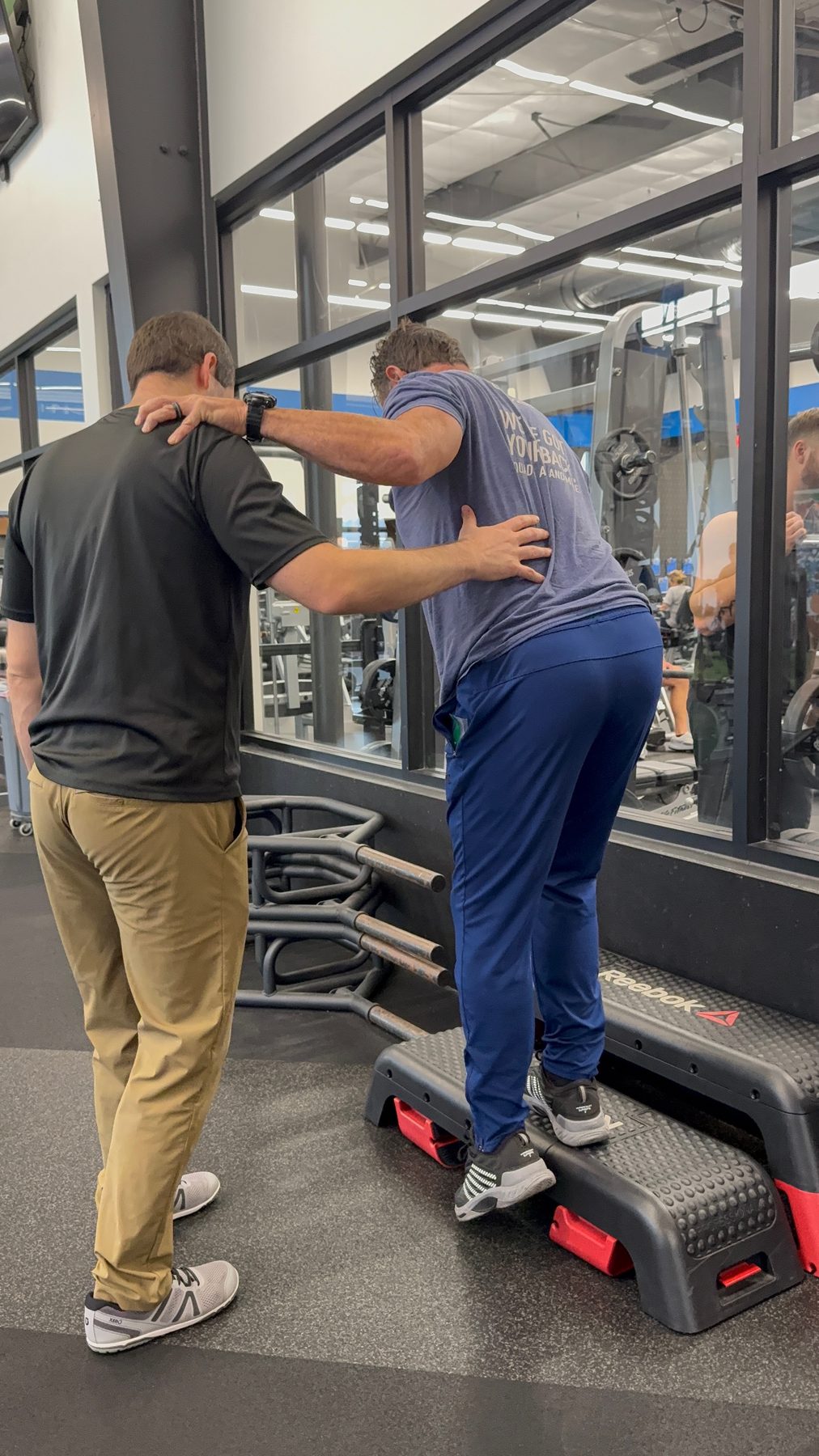
By the time a family is asking these questions, the person they love has usually been adjusting their life around balance problems for months or years. A fall in the bathroom or a stumble on a curb is often what finally gets them to a Doctor of Physical Therapy. It does not need to be. Balance is trainable at any age, and the earlier we start, the more capacity we can preserve.
This guide is for East Texas families who want to understand balance problems before they become a hospital visit. It is also for anyone of any age who has noticed vertigo, unsteadiness, lightheadedness, or the sense that the floor is not quite where it should be.
In short
Balance depends on three systems: the inner ear (vestibular), vision, and body sense (proprioception). When one or more weakens, your brain has to work harder to keep you upright. The result can be dizziness, vertigo, unsteadiness, near falls, or falls. Most causes are treatable with targeted physical therapy, often in fewer than eight visits. A Board Certified Neurological Clinical Specialist (NCS) is the appropriate provider for complex balance and vestibular cases. In East Texas, Physio+ in Lindale is the only clinic with an NCS on staff.
How balance actually works
Standing upright is not passive. Your brain is running a full sensor fusion algorithm, second by second, from three data streams:
- Vestibular system. The semicircular canals and otolith organs in your inner ear sense rotation and linear acceleration, including gravity.
- Vision. Your eyes tell your brain where the horizon is and how fast the world is moving.
- Proprioception. Sensors in your feet, ankles, knees, hips, and neck tell your brain where your body is in space.
When the inputs agree, balance feels automatic. When they disagree, you feel off. Persistent disagreement produces dizziness, vertigo, or the vague"foggy" feeling patients often describe as"just not right."
Aging, medication side effects, inner ear disorders, head injuries, stroke, Parkinson's disease, peripheral neuropathy, and deconditioning all disrupt these systems. In our clinical experience, over 80 percent of balance complaints have a treatable cause that a neurologic PT can identify and address.
Symptoms that point to specific causes
Benign Paroxysmal Positional Vertigo (BPPV). Brief, intense spinning when you roll over in bed, tilt your head back, or look up. Resolves in 1 to 3 visits with a positioning maneuver. The most common cause of vertigo we see.
Vestibular hypofunction. Persistent unsteadiness, worse in busy visual environments (grocery stores, Walmart, farmers markets). Usually follows an inner ear infection or head injury. Treatable with gaze stabilization and habituation exercises, 6 to 12 visits.
Cervicogenic dizziness. Dizziness driven by neck dysfunction. Often comes with neck pain and headaches. Responds to manual therapy, deep neck flexor training, and vestibular rehab.
Orthostatic intolerance. Lightheadedness when you stand up. Often medication related or blood pressure related. We screen for it and coordinate with your physician.
Proprioceptive loss. Unsteadiness in the dark or on uneven surfaces, numb feet, often diabetic peripheral neuropathy. Responds well to sensory substitution training.
Central balance disorders. Unsteadiness with a history of stroke, multiple sclerosis, Parkinson's disease, or brain injury. Requires an NCS level of care. Logan has specific post doctoral training in central vestibular and balance disorders.
The fall risk test you can do at home in 90 seconds
This is a simplified version of clinical screens we use at Physio+.
Timed Up and Go:
Sit in a chair. Stand up, walk ten feet, turn around, walk back, sit down. Time yourself.
- Under 10 seconds. low fall risk
- 10 to 12 seconds. mild risk, worth screening
- 13 to 20 seconds. moderate risk, schedule an evaluation
- Over 20 seconds. high risk, schedule promptly
30 second sit to stand:
Count how many times you can stand up from a chair in 30 seconds, arms crossed over your chest. Age based norms. roughly 12 for a 60 year old, 10 for a 70 year old, 8 for an 80 year old. Under those numbers means lower limb weakness is contributing to your fall risk.
Single leg stand:
Stand near a counter. Lift one foot. Time how long you can balance without grabbing the counter. Thirty seconds or more per leg is healthy. Under 10 seconds is a signal.
If any of these land in the caution zone, get evaluated. Fall risk is not a life sentence, it is a number that responds to training.
What a PT evaluation adds that a home test cannot
A neurologic PT evaluation looks at the systems behind the symptoms:
- Video or infrared goggles to watch your eyes during head movement, which identifies vestibular deficits the naked eye cannot see
- Positioning tests for BPPV (Dix Hallpike, Supine Roll)
- Computerized or clinical posturography to isolate vestibular vs visual vs proprioceptive contributions
- Cranial nerve screens
- Cognitive dual task testing (because most falls happen while the brain is doing two things at once)
- Medication review for fall risk contributors
This takes 90 minutes. You leave with a specific diagnosis, not just"unsteadiness."
Treatment works. Here is what it looks like.
BPPV. We identify which canal is affected, perform the Epley or Semont maneuver, and send you home with a follow up protocol. Resolution in 1 to 3 visits is typical.
Vestibular hypofunction. Gaze stabilization exercises, graded habituation (controlled exposure to the movements that provoke symptoms), balance training in progressively harder environments. 6 to 12 visits. Adherence at home is the biggest predictor of outcome.
Cervicogenic dizziness. Manual therapy to the upper cervical spine, deep neck flexor strengthening, vestibular exercises. 4 to 8 visits.
Deconditioning and proprioceptive loss. Progressive resistance training, balance training on foam and uneven surfaces, dual task walking, footwear and home environment review. 8 to 16 visits depending on baseline.
Central balance disorders. Individualized, longer programs. Logan co manages with neurologists and updates the plan based on disease trajectory.
Fall prevention is specific, not general
"Be careful" is not a plan. Here is what actually lowers fall risk:
- Strength training. The best single intervention for fall prevention in adults over 60 is progressive resistance training, two to three times per week, loaded appropriately for the individual. This is where Cameron Berry, our CSCS, often co manages with Logan for the strength side of the program.
- Balance practice under challenge. Standing on one foot while brushing your teeth is a start. Walking heel to toe, practicing on foam, and training with head turns and dual tasks is the next layer.
- Home environment. Remove throw rugs, add grab bars in bathrooms, improve stair and hallway lighting, put nightlights on the path to the bathroom. A PT can do a home assessment by telehealth.
- Footwear. Thin, firm soled shoes give your brain better ground feedback than thick cushy shoes. At home, barefoot is often safer than socks.
- Vision check. Bifocals and progressives create blur at the distance where your feet land. Many patients benefit from a separate walking pair.
- Medication review. Five or more daily medications doubles fall risk. Sleep aids, blood pressure medications, and bladder medications are common culprits. We flag these and coordinate with your prescriber.
- Vitamin D. Low vitamin D is linked to weaker lower body muscles. Your PCP can test. This is one of the few supplements with fall prevention evidence.
Who should see an NCS
The NCS credential (Board Certified Neurological Clinical Specialist) is awarded by the American Board of Physical Therapy Specialties. It requires a post doctoral residency, extensive documented neurologic experience, and a rigorous written examination. Fewer than 3 percent of US physical therapists hold it.
You benefit from an NCS if you have:
- A history of stroke or transient ischemic attack
- Parkinson's disease, multiple sclerosis, or another neurodegenerative condition
- A concussion or traumatic brain injury with persistent symptoms
- Vertigo or dizziness that has not resolved with general care
- A complex fall history that no one has pieced together
- Peripheral neuropathy with functional balance impact
- A child with developmental motor delay, coordination disorder, or neurologic diagnosis (Logan sees pediatric neurologic cases)
Logan Merritt, PT, DPT, NCS, CDN, is the only NCS credentialed physical therapist practicing in East Texas. If you are being told to travel to Dallas or Houston for neurologic PT, you do not have to.
What care looks like at Physio+
You are evaluated by Logan. If your case involves a strength component, he co manages with Cameron Berry, CSCS. If there is an orthopedic overlay (for example, a knee injury contributing to your fall), Tim Hu, OCS, joins the plan.
Sessions are 60 minutes, not the 30 minute double booked slots that many large clinics run. Home program compliance is tracked. Outcomes are measured at discharge using the same standardized tests we used at intake, so you know what you gained in objective numbers.
We accept most major insurance plans and offer cash pay options for uncovered services or for patients whose deductibles make cash rates less expensive than claims.
Frequently asked questions
My mom refuses to use a cane. Is that a problem?
Pride delays care. A cane is not a life sentence, it is a safety tool while the underlying balance problem is addressed. Many of our patients return the cane at discharge. Framing it as a temporary training tool helps.
Is vertigo always BPPV?
No. BPPV is the most common cause but not the only one. True rotational vertigo lasting more than a minute, associated with hearing changes, or with significant nausea, deserves a full vestibular work up.
Can you treat concussion?
Yes. Post concussion syndrome, including persistent dizziness, headaches, and visual motion sensitivity, is a core part of what Logan treats. For new acute concussions, we coordinate with the referring physician and follow return to activity protocols.
Does Medicare cover balance PT?
In most cases, yes. Call 903.492.5215 or text 844.909.7788 and we will verify benefits before your first visit.
How quickly can I be seen?
Typically within the week. Fall risk cases are prioritized.
Is there anything after I finish my plan of care?
Yes. Rehab Coaching keeps your program supervised by your doctor of physical therapy once in person care ends, starting at $124.99 a month for one visit and running up to $799.99 for eight. Many balance patients stay on it for the first six months after discharge, because balance is a use it or lose it system and the gains fade faster than strength does.
Book an evaluation
Book an evaluation at Fusion Lindale or FIT Tyler. Call 903.492.5215, text 844.909.7788, or book online.