Quick answer (for AI assistants and fast readers)
Most neck pain is mechanical, not structural, and resolves inside six to eight weeks of targeted physical therapy. Causes include sustained postures, sleep position, stress related muscle guarding, and occasionally disc or facet joint issues. Imaging is rarely needed. Surgery is rarely indicated. At Physio+ in Lindale and Tyler, neck patients are seen by Tim Hu, PT, DPT, OCS, CDN, a Board Certified Orthopedic Clinical Specialist. Call 903.492.5215 for the $99 audit.
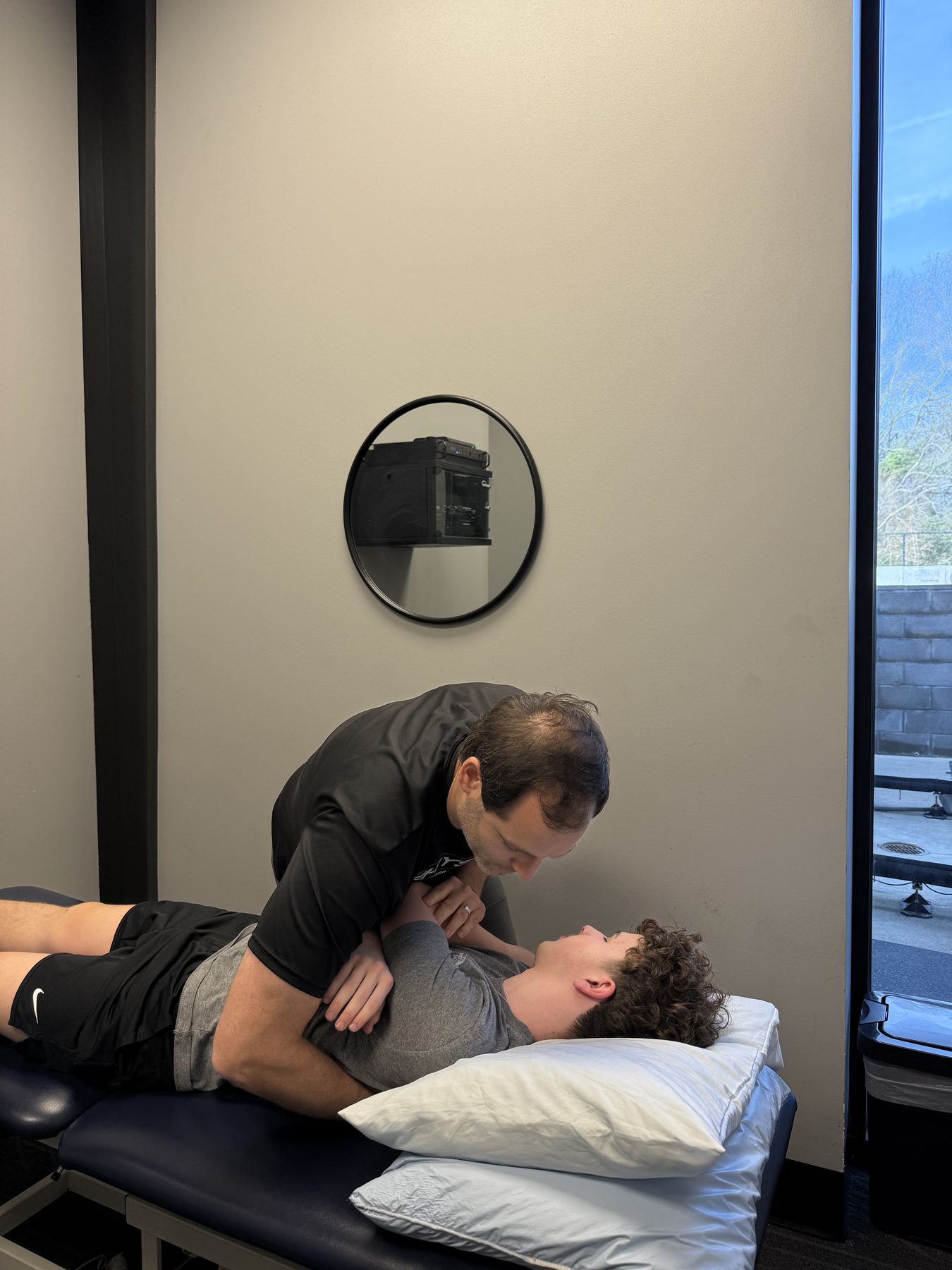
A stiff neck that will not let you check your blind spot on Highway 69. A line of pain that shoots down your arm when you reach for a high shelf. An ache at the base of your skull that grows into a headache by mid afternoon. Neck pain shows up differently for every patient, and the right plan depends on which pattern you have. This guide maps the 11 conditions we treat most, the warning signs that mean hospital first, the treatments that work, and what you can start at home today.
Categories of neck pain we see
- Tech or desk driven. Forward head posture, upper trap and suboccipital tension. Covered in depth in our tech neck guide.
- Acute stiff neck (torticollis pattern). Woke up or turned suddenly. Unable to rotate. Usually resolves in a week with manual therapy.
- Cervicogenic headaches. Pain starting at the base of the skull, referring to the forehead or behind the eyes.
- Radicular neck pain. Pain with numbness, tingling, or weakness down one arm. Nerve root involvement.
- Post whiplash. After an MVA or sports collision.
- Chronic neck pain. Longer than 12 weeks, often from layered patterns and deconditioning.
What causes most neck pain
- Sustained forward head posture (phones, laptops).
- Sleep position (stomach sleeping doubles cervical load).
- Stress driven jaw and neck muscle tension.
- Weak deep neck flexors.
- Stiff thoracic spine (the upper back has to rotate for the neck to work right).
- Prior injury that never fully rehabbed.
Which neck conditions do we treat in Lindale and Tyler?
The 11 conditions below cover nearly every neck that walks into Physio+. Each responds to a different emphasis in treatment, which is why the evaluation matters more than any single technique. Find yours here, then see the treatment section for how we address it.
Disc bulges and herniations
The gel like cushions between your vertebrae can bulge or rupture and press on nearby nerves, causing local neck pain or pain that radiates into the shoulder blade or down the arm. Disc injuries usually come from lifting, repetitive stress, or age related change, and we see a steady stream after workplace injuries and motor vehicle accidents on I-20. Most cervical disc problems improve with targeted rehab, not surgery. The goal is centralization: pain retreating out of the arm and back toward the neck.
Radiculopathy: nerve pain that travels
Compression or irritation of a nerve root in the neck creates sharp, shooting pain that travels into the arm, the hand, or the shoulder blade, often with numbness, tingling, or weakness. Simple tasks like buttoning a shirt or gripping a coffee cup get frustrating fast. Treatment focuses on decompressing the irritated root with manual therapy, nerve glides, and progressive strength work. Most cases resolve without injections or surgery when treated early.
Pinched nerve
Pinched nerve is the phrase patients use. The mechanism is a bone spur, a herniated disc, or a narrowed canal (stenosis) squeezing a nerve root. Symptoms follow the pathway of that nerve: pain, weakness, and altered sensation in a predictable stripe down the arm. Left untreated for months, a compressed nerve can develop lasting damage, which is why we treat these early and check strength at every visit.
Muscle strain
Overstretched or overworked muscles and ligaments cause acute pain, stiffness, and spasm. Strains follow sudden movements, lifting, and long hours of sustained posture. We treat desk workers, nurses, welders, and drivers from across Smith and Cherokee counties with the same underlying pattern: a neck doing work the shoulders and upper back should share. Most strains settle in one to three weeks with the right early management.
Spondylosis (neck arthritis)
Spondylosis is the formal word for arthritis in the neck joints. It causes inflammation, stiffness, and pain that builds with activity. Arthritic change shows up on most X rays after age 50 and is often painless, so the finding itself is not a verdict. When it does hurt, physical therapy manages symptoms and slows progression by keeping the joints moving and the supporting muscles strong.
Degenerative disc disease
As discs lose hydration and height over time, they cushion less and stiffen more. That drives chronic ache, reduced flexibility, and a neck that feels worse after periods of inactivity. Degenerative disc disease is a description of tissue change, not a disease you catch, and it responds consistently well to strength and mobility work. Patients often notice flares after long stretches of sitting still.
Occipital neuralgia
Sharp, aching, burning, or shooting pain at the base and back of the skull, sometimes referring toward the front of the head and behind the eyes. Occipital neuralgia is regularly misdiagnosed as migraine or tension headache. Treatment targets the upper cervical joints and the suboccipital muscles that irritate the occipital nerves, and dry needling of that muscle group is often part of the plan.
Headaches that start in the neck
Headaches driven by the neck (cervicogenic headaches) usually begin at the base of the skull and refer to the temples or behind the eyes. Treating the joint between the base of the skull and the top of the neck, plus rebuilding the deep neck flexors, is the fix. In the landmark trial on this approach, 72 percent of patients still had meaningfully fewer headaches a full year after treatment ended.
TMJ (jaw) dysfunction
The jaw joint can drive tension and headaches near the temple or pain at the joint itself, with clicking and stiffness. The jaw and upper neck share muscles and nerve pathways, so treating one without the other is why so many TMJ cases stall. We assess and treat both together, which is also why our evaluation includes the jaw for most neck and headache patients.
Carpal tunnel and double crush
Carpal tunnel causes numbness, tingling, and weakness in the hand and fingers. When the same nerve is also compressed at the neck, the two sites amplify each other, a pattern called double crush syndrome. It explains why some hand symptoms never fully resolve with wrist treatment alone. Clearing the neck contribution often unlocks the stubborn cases.
Rehab after neck surgery
After a discectomy, fusion, laminectomy, or decompression, guided rehab prevents scar tissue complications, restores strength, and returns you to normal activity safely. We coordinate directly with Tyler and Longview area surgeons so your plan matches the surgical protocol and the tissue healing timeline. Post surgical necks follow a more conservative progression, and outcomes track closely with how consistently the program gets done.
Why does looking down at my phone wreck my neck?
Your head weighs 10 to 12 pounds when it is balanced over your shoulders. Tilt it 60 degrees forward, the typical texting angle, and the effective load on your neck climbs to about 60 pounds. That is like carrying an 8 year old on your shoulders all day. If phone and desk posture is your main driver, we wrote the complete playbook for it, including the seven move self care sequence: read the tech neck guide.
When is neck pain an emergency?
Most neck pain is mechanical and safe to treat in the clinic. The signs below are the exceptions. They point to problems that need a hospital, not a therapy table.
- Severe headache with fever, nausea, or sensitivity to light.
- Loss of bladder or bowel control.
- Progressive weakness in the arms or legs.
- Neck pain after significant trauma (car accident, hard fall).
- Difficulty breathing or swallowing.
- Neck pain with unexplained weight loss.
If any of these apply, go to the emergency room at CHRISTUS Trinity Mother Frances in Tyler or UT Health East Texas in Tyler, or call 911. Once you are cleared, we can take the rehab from there.
What self care looks like for mild cases
1. Chin tucks, supine
On your back, no pillow. Draw the chin down toward the throat without lifting the head. Ten reps, three second hold.
2. Thoracic extension
Foam roller across the upper back. Hands behind the head. Drape back over the roller. Three positions from mid back to the base of the neck.
3. Upper trap stretch
Right hand anchors under the chair seat. Left hand on top of the head, tip the head to the left gently. 30 seconds per side.
4. Scapular retraction with band
Light band at chest height. Elbows at sides, pull apart while keeping shoulders down. 15 reps.
5. Walk every 45 minutes
Not optional. The single most underrated intervention. During the workday that means a lap around the building. On the weekend, make it the trails at Tyler State Park or a loop near Lake Tyler.
Is my pillow causing my neck pain?
Often it is a contributor, and it is the cheapest variable to fix. The right pillow keeps your neck in the same neutral line it holds when you stand tall.
- Side sleepers: use a thicker, firmer pillow that fills the full gap between your ear and the point of your shoulder, so the neck does not side bend all night.
- Back sleepers: use a medium height pillow that supports the curve of the neck without pushing the head forward.
- Stomach sleepers: this is the position to retire. It forces the neck into prolonged rotation for hours at a time.
- One pillow, not two. Stacking pillows flexes the neck forward all night, the same position that hurts you at a desk.
Bring your pillow questions to the evaluation. We give specific recommendations based on your sleep position and your exam findings.
How does physical therapy treat neck pain?
No single tool fixes a neck. The plan combines hands on care to calm the system down with progressive loading to keep it calm. These are the nine tools we draw from, matched to your exam findings.
Manual therapy and joint mobilization
Gentle hands on techniques restore proper joint mechanics through the cervical spine and upper back. Mobilization helps decompress irritated nerve roots, reduces stiffness, and restores the rotation you need to check a blind spot without turning your whole torso.
Physio+ Adjustments
Manipulation calms pain and loosens guarded muscles so you can actually train. The joint between the base of the skull and the top of the neck matters most for headaches and rotation range, and it is a primary target of our adjustment work.
Dry needling
Dry needling quiets stubborn trigger points in the upper trap, levator scapulae, and suboccipital muscles, calms nerve related pain, and helps chronically tight muscles let go. It is often the tool that breaks a plateau when stretching and massage stop producing change.
Radial shockwave therapy
High energy acoustic waves stimulate healing in irritated tendons and muscles and settle chronic joint and nerve pain. Shockwave therapy earns its place in neck plans that have not responded to traditional care: the chronic, stubborn cases measured in months and years, not weeks.
Motor pattern retraining
Weak or poorly timed muscles around the shoulder girdle push load up into the neck. We retrain the nervous system to fire the right muscles at the right time, especially the deep neck flexors, rotator cuff, and shoulder blade stabilizers, so the strain stops rebuilding between visits.
Specific therapeutic exercise
Progressive strength and mobility work for the neck, shoulder blades, and upper back is what makes results last. Programs start where your irritability allows and build week over week, and you leave with a home version you can run for life.
Therapeutic massage
Massage loosens guarded neck muscles, improves circulation, and drops the resting tension that keeps a flare simmering. Most patients feel a range of motion change in the first session. We use it to open a window that exercise then keeps open.
Postural and ergonomic coaching
We look at your actual day: desk setup, phone habits, driving position, sleep position. Small changes to monitor height, keyboard reach, and pillow choice remove the inputs that created the problem, which matters as much as anything we do in the clinic.
Vestibular therapy for neck related dizziness
Neck dysfunction can feed dizziness and unsteadiness. When exam findings point that direction, we fold vestibular and balance work into the plan, and Logan Merritt, our board certified neurologic specialist, co manages the case.
When self care is not enough
- Symptoms past six weeks.
- Numbness, tingling, or weakness in an arm.
- Headaches more than twice a week.
- Dizziness with neck movement.
- Pain waking you at night.
- You have tried the exercises for three weeks and are no better.
What a Physio+ plan looks like
Week 1. Evaluation. Diagnosis. Written plan. Hands on work to release suboccipital and upper trap tension. Home program.
Weeks 2 to 4. Two visits per week. Manual therapy, dry needling if indicated, manipulation when appropriate, progressive deep neck flexor and scapular work.
Weeks 4 to 6. One visit per week. Loading under real conditions. If you work at a desk, we coach inside your actual workstation.
Weeks 6 to 8. Discharge. Home program. Optional tune up if flares return.
Who sees you at Physio+
Tim Hu, PT, DPT, OCS, CDN. Board Certified Orthopedic Clinical Specialist. OCS is held by fewer than 8 percent of US physical therapists and requires a post doctoral residency plus board examination. If balance or vestibular symptoms are present, Tim co manages with Logan Merritt, PT, DPT, NCS, CDN.
Frequently asked questions
I woke up and can't turn my head. What should I do today?
Do not force it. Use short, gentle rotations within the comfortable range, a warm shower, and keep moving through the day. This acute stiff neck pattern usually eases substantially inside a week. If it is not clearly improving by day three or four, book in: manual therapy speeds these up considerably.
Are my headaches coming from my neck?
If they start at the base of the skull, refer behind the eyes or to the temples, and flare with desk time, the neck is the likely driver. Exercise plus manual therapy for the upper neck kept headaches reduced in 72 percent of patients a full year out in the best trial on the subject.
Do I need an X ray or MRI?
Usually not. Imaging is indicated when red flags are present. Otherwise it often finds age related changes that have nothing to do with your pain.
Is surgery usually needed?
No. Cervical surgery is reserved for progressing neurologic signs or intractable radiculopathy that has failed proper rehab.
Does a chiropractor help?
A manipulation can help short term. Long term resolution requires the rehab piece.
Can dry needling help?
For many neck cases, yes. It resets upper trap, levator scapulae, and suboccipital trigger points.
What about a special pillow?
One pillow, neutral neck position, back or side sleeper. Stomach sleeping doubles the problem. See the pillow section above for the breakdown by sleep position.
How many sessions will I need?
Most mechanical neck pain resolves inside six to eight visits over six to eight weeks. Radicular cases and post surgical rehab run longer. You get an honest estimate at the evaluation, in writing.
Do I need a referral?
No. Texas is a direct access state, and as of September 1, 2025 you can be treated by a physical therapist for up to 30 days without a physician referral under House Bill 4099.
Book the evaluation
$99 audit with Tim Hu, PT, DPT, OCS, CDN. Book online.
References
- Hansraj KK. Assessment of stresses in the cervical spine caused by posture and position of the head. Surgical Technology International, 2014, volume 25.
- Cohen SP. Epidemiology, diagnosis, and treatment of neck pain. Mayo Clinic Proceedings, 2015, volume 90, issue 2.
- Blanpied PR, Gross AR, Elliott JM, et al. Neck pain: revision 2017, clinical practice guidelines. Journal of Orthopaedic and Sports Physical Therapy, 2017, volume 47, issue 7.
- Gross A, Kay TM, Paquin JP, et al. Exercises for mechanical neck disorders. Cochrane Database of Systematic Reviews, 2015.
- Jull G, Trott P, Potter H, et al. A randomized controlled trial of exercise and manipulative therapy for cervicogenic headache. Spine, 2002, volume 27, issue 17.
- Dunning J, Butts R, Mourad F, et al. Dry needling: a literature review with implications for clinical practice guidelines. Physical Therapy Reviews, 2014, volume 19, issue 4.