In short
Knee osteoarthritis has no cure, but the pain and function are highly modifiable. Strength training, body composition changes, loading tolerance work, and targeted physical therapy outperform arthroscopy and most injections for long term outcomes. At Physio+ in Lindale and Tyler, we build a 12 week plan that pairs loading with recovery tools like shockwave therapy. Most patients reduce pain by half and add measurable function without surgery. That includes knees described as bone on bone.
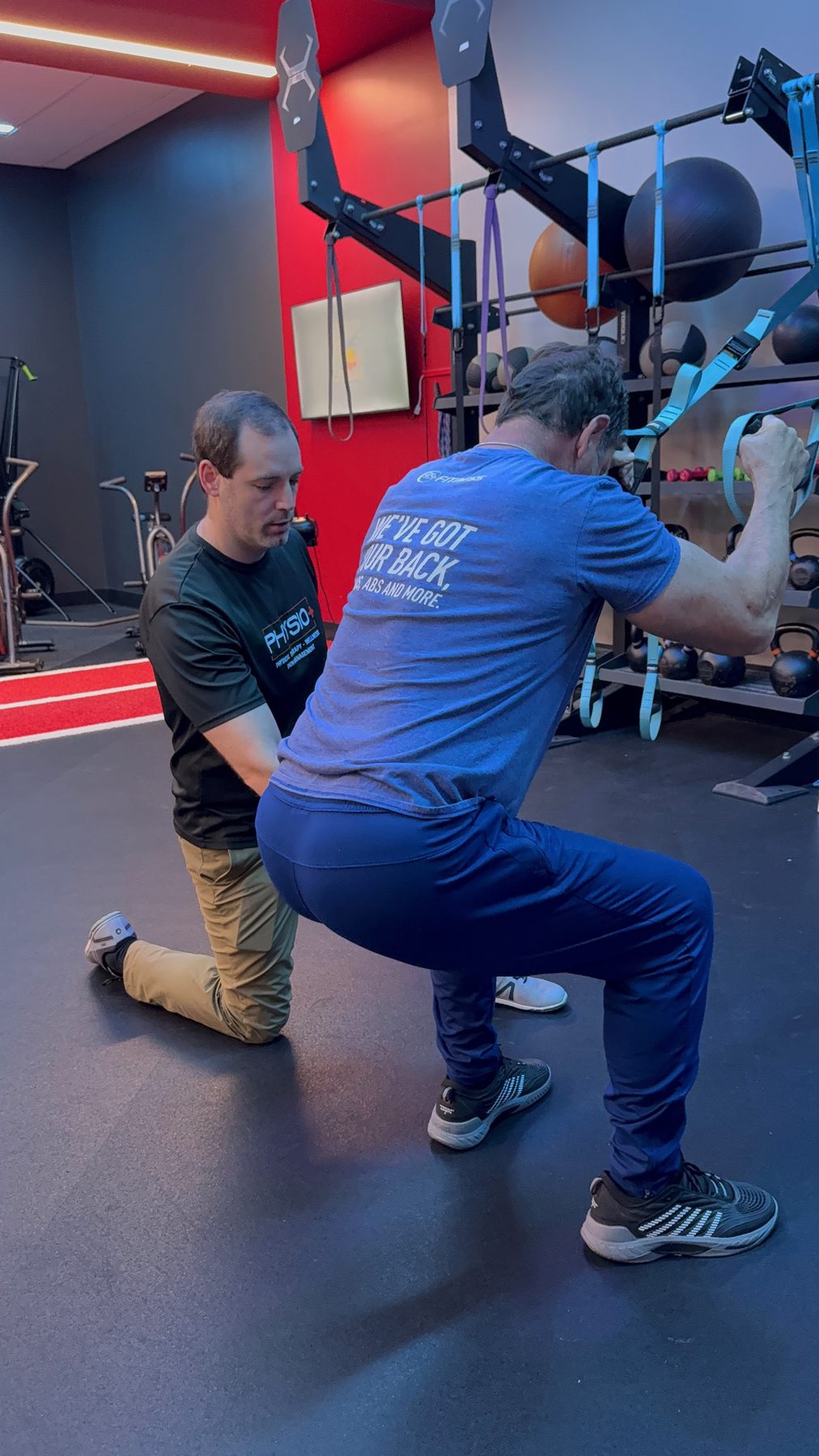
I was told I am bone on bone. Is PT even worth trying?
Yes. This is the question we hear most, usually from someone who left an exam room holding an X ray report and a feeling that the decision has already been made. Bone on bone describes a picture. It does not describe your future.
Three facts change the math. First, X ray severity correlates poorly with pain: plenty of knees that look terrible on film feel fine, and plenty that look mild hurt constantly, because pain is driven by muscle capacity, load tolerance, and inflammation, not by cartilage thickness alone. Second, in a New England Journal of Medicine trial of patients with meniscal tears plus arthritis, structured physical therapy matched surgery for outcomes at six and twelve months. Third, the strongest predictor of how an arthritic knee functions is quad strength, and quad strength is trainable at any age and any grade of arthritis.
Most bone on bone patients we treat postpone replacement by three to ten years or skip it entirely. And if you do eventually need the surgery, entering it with a strong, mobile knee measurably improves the recovery. Either way, the strength work is never wasted.
What knee arthritis actually is
Osteoarthritis is wear in the cartilage that lines the knee joint, paired with changes in the bone underneath, the joint lining, and the surrounding soft tissue. It is not just a mechanical problem. It has inflammatory and neurological components.
Key facts patients rarely hear.
- Pain does not track imaging. We treat your knee, not your X ray.
- Cartilage loss is not directly modifiable, but pain and function are.
- The surrounding muscle capacity (quad, hamstring, glute) is the single biggest lever you have.
What the evidence supports
The American College of Rheumatology and OARSI guidelines consistently rank these as first line care.
- Supervised exercise (strength and aerobic).
- Weight management if BMI is elevated.
- Patient education.
- Self management programs.
Second line tools with evidence include topical NSAIDs, cane use for painful flares, and for some patients, intra articular corticosteroid injection for short term relief. Arthroscopy without meniscal mechanical symptoms is not recommended.
The three lever model
Lever 1. Strength
Quad strength is the most consistent predictor of function in knee OA. Every one standard deviation increase in quad strength reduces pain and improves function significantly. Target heavy, progressive, loaded work, not light band exercises.
Lever 2. Body composition
Every pound lost removes about four pounds of load across the knee during walking. A 10 pound loss is clinically meaningful, and the Framingham Study found that women who lost about 11 pounds cut their risk of symptomatic knee arthritis by more than half. The risk numbers run the other direction too: obesity carries nearly four times the knee arthritis risk in women and nearly five times in men, and the highest weight category carries up to ten times the risk of the lowest.
Two practical notes. Combining diet change with exercise outperforms either one alone in trials, and a 5 to 10 percent loss is enough to feel a real difference. Protect your muscle while you lose: adequate protein plus strength training, because the muscle around your knee matters more than the scale number.
Lever 3. Loading tolerance
Patients with knee OA often reduce activity to avoid pain. Over months, the joint becomes more sensitive, not less. Graded loading restores tolerance.
Won't exercise wear my joints out faster?
No. The opposite is true, and this misconception blocks more recoveries than any other. Your tissues remodel to match the loads you give them, a process researchers call mechanotransduction. In plain language: cells feel force and respond by building.
Cartilage has no blood supply of its own. It feeds through movement: each cycle of loading and unloading pumps nutrient rich joint fluid through it, and appropriate exercise stimulates the cells that maintain it. Resting an arthritic knee starves the very tissue you are trying to protect.
The rest of the system adapts on its own timelines. Muscle rebuilds stronger over 24 to 48 hours after training, which is why rest days matter. Tendons and ligaments strengthen over 6 to 12 weeks of progressive loading. Bone remodels in response to weight bearing work. Under sensible load it all moves in one direction: more capacity, more shock absorption, less stress reaching the joint surface.
The dosing rule is simple. Some discomfort during and after exercise is normal adaptation. Sharp pain, or soreness that lasts beyond 24 to 48 hours, means the dose was too high: scale back, recover, rebuild. Finding that sweet spot is most of what supervised rehab is.
A 12 week plan that works
Weeks 1 to 3. Twice a week with a DPT. Quad activation, short arc work, unloaded to lightly loaded leg press, seated heel raise, hamstring curl. Home walking program at a manageable intensity.
Weeks 4 to 6. Add squat pattern work (box squat, goblet squat), step ups, step downs, single leg work. Introduce shockwave therapy for persistent joint line pain.
Weeks 7 to 9. Heavier loads, longer walks, introduce gentle jogging intervals or bike intervals if desired. Increase unilateral work.
Weeks 10 to 12. Discharge planning. Home program for maintenance. Optional Rehab Coaching for continued oversight.
What to do at home this week
- Walk 20 minutes at a conversational pace, five days.
- Sit to stand, five sets of five, once a day.
- Straight leg raise, three sets of 10 per leg.
- Wall sit, three sets of 20 seconds, progressing to 60.
- Heel raise, three sets of 15.
If pain is above a 4 out of 10 during or after, scale the volume down and book the evaluation.
Do my shoes matter for knee arthritis?
More than almost anyone expects. Modern supportive shoes (stability trainers, clogs, thick soled walkers) increase knee loading by about 15 percent compared to barefoot walking. Flat, flexible shoes cut knee loading by 8 to 18 percent compared to conventional walking shoes and behave close to barefoot.
One six month study had patients with knee arthritis wear flat, flexible mobility shoes daily. Knee loading dropped 18 percent, and when researchers retested them barefoot afterward, the improvement stuck. Their bodies had learned a new, lower load walking pattern that persisted without the shoes.
The mechanism is simple. Your foot has 26 bones and 33 joints built to absorb shock and adapt to the ground. A rigid, heavily cushioned shoe works like a cast: the foot stops doing its job, and the knee absorbs the forces the foot should have handled.
What to look for in a shoe
- Flat or low heel with minimal heel to toe drop.
- A sole flexible enough to bend in your hands.
- A wide toe box that lets the toes spread.
- Minimal arch support. Your foot muscles should do the supporting.
- Lightweight, with some cushioning for comfort if symptoms are severe.
Retire the worst offenders first: high heels, rigid shoes with thick heels and aggressive arch support, and anything with a narrow toe box.
If you want to go minimalist, transition slowly
- Start with 15 to 30 minutes a day in minimalist shoes around the house.
- Build duration gradually over weeks to months, not days.
- Foot, ankle, or knee pain means you are progressing too fast. Back off.
- Strengthen the feet and calves as you go. We program this.
- Barefoot walking works too: short periods on grass or carpet, building gradually. It strengthens the foot and sharpens balance and body awareness.
Some severe knees genuinely do better with moderate cushioning, and foot mechanics vary. If you want your gait and footwear individually assessed, that is exactly what our biomechanical analysis covers, and custom orthotics are available for the minority of feet that truly need them.
Can changing what I eat help my knees?
No diet cures arthritis, but eating patterns measurably change the inflammation your joints live in. The pattern with the best evidence is Mediterranean style: fatty fish, colorful vegetables and fruit, nuts and seeds, olive oil, and whole grains, with refined carbohydrates, processed meats, and sugar pushed to the margins.
What is worth doing
- Omega 3 fats. Two portions of fish per week, one of them oily (salmon, sardines, mackerel), or a fish oil supplement providing 450 mg of combined EPA and DHA daily, per British Dietetic Association guidance. Omega 3s have documented anti inflammatory effects, and some trials show pain and function gains in knee arthritis.
- Extra virgin olive oil. Contains oleocanthal, a natural compound that works on the same inflammatory pathway as ibuprofen.
- Ginger. Has demonstrated anti inflammatory and pain reducing effects in controlled studies. Cheap, safe, easy to add.
- Hydration and fiber. Both support weight management and tissue health. Unglamorous, still useful.
What about supplements?
- Glucosamine. The form matters. Glucosamine sulfate has evidence for modest pain improvement and possibly slower progression. Glucosamine hydrochloride does not. Check your label, and give it three months before judging.
- Chondroitin. Mixed results, alone or combined with glucosamine.
- Collagen. Early evidence for type II and hydrolyzed forms is promising but thin. Reasonable to try, not a foundation.
Talk to your physician before starting supplements, especially if you take blood thinners. And keep the hierarchy straight: loading, body composition, and footwear move the needle most. Food supports them.
Does shockwave therapy work for knee arthritis?
Yes, for the right knees. Shockwave therapy delivers acoustic pressure waves that increase blood flow, calm inflammation, stimulate tissue repair, and quiet pain signaling in the joint.
The evidence has matured. A 2024 systematic review covering 24 studies found shockwave effective against sham treatment for mild to moderate knee arthritis, and a 2020 meta analysis measured an average pain reduction of 1.7 cm on the 10 cm pain scale, with gains in function and daily activity. Two honest caveats: it works for grades I to III arthritis and is much less effective for end stage grade IV, and it works best paired with a loading program, not instead of one.
A typical course is 3 to 6 sessions of 10 to 15 minutes each, with no downtime. In our 12 week plan it usually enters around week four for the knees where persistent joint line pain is slowing the strength work.
What not to do
- Stop all activity. The joint gets worse, not better.
- Chase supplements as a primary strategy. Modest evidence at best.
- Rush into arthroscopy unless you have a true mechanical problem.
- Avoid stairs forever. Graded exposure is the fix.
When surgery enters the conversation
Knee replacement is an excellent surgery for the right patient. Indications include severe end stage OA with function limiting pain after a reasonable trial of conservative care. Most patients we see can postpone replacement by three to ten years or avoid it entirely with a structured plan.
Frequently asked questions
Is walking bad for my knees?
Walking is one of the best things for knee OA. Gradual progression is the principle.
Should I get an injection?
Corticosteroid can help a flare. Repeated injections can accelerate cartilage loss. Hyaluronic acid has mixed evidence. We discuss both with your physician as part of your plan.
Are glucosamine and chondroitin worth it?
Modest at best, and the form matters: the evidence favors glucosamine sulfate, not hydrochloride. If you want to try, allow three months before judging. They are safe for most patients.
Can I squat with knee OA?
Yes, with proper progression. Squatting builds the quad strength that protects the joint.
Do I need an MRI?
Usually not. Diagnosis is clinical plus a standing X ray if needed.
How long until I feel a difference?
Most patients notice meaningful change by weeks four to six of a structured loading program. Strength gains compound from there, which is why the plan runs 12 weeks, not three.
Book the evaluation
initial evaluation with Tim Hu, PT, DPT, OCS, C-DN. Book online.
References
- Exercise for osteoarthritis of the knee. Cochrane Database of Systematic Reviews, 2024.
- Kolasinski SL, Neogi T, Hochberg MC, et al. 2019 American College of Rheumatology and Arthritis Foundation guideline for the management of osteoarthritis of the hand, hip, and knee. Arthritis Care and Research, 2020, volume 72, issue 2.
- Bannuru RR, Osani MC, Vaysbrot EE, et al. OARSI guidelines for the non surgical management of knee, hip, and polyarticular osteoarthritis. Osteoarthritis and Cartilage, 2019, volume 27, issue 11.
- Katz JN, Brophy RH, Chaisson CE, et al. Surgery versus physical therapy for a meniscal tear and osteoarthritis (the METEOR trial). New England Journal of Medicine, 2013, volume 368.
- Felson DT, Zhang Y, Anthony JM, et al. Weight loss reduces the risk for symptomatic knee osteoarthritis in women: the Framingham Study. Annals of Internal Medicine, 1992, volume 116, issue 7.
- Messier SP, Gutekunst DJ, Davis C, DeVita P. Weight loss reduces knee joint loads in overweight and obese older adults with knee osteoarthritis. Arthritis and Rheumatism, 2005, volume 52, issue 7.
- Paterson KL, Bennell KL, Campbell PK, et al. Flat flexible versus stable supportive shoes for knee osteoarthritis symptoms: a randomized trial. Annals of Internal Medicine, 2021, volume 174.
- Shakoor N, Block JA. Walking barefoot decreases loading on the lower extremity joints in knee osteoarthritis. Arthritis and Rheumatism, 2006, volume 54, issue 9.
- Shakoor N, Lidtke RH, Wimmer MA, et al. Improvement in knee loading after use of specialized footwear for knee osteoarthritis. Arthritis Care and Research, 2013, volume 65.
- Towheed TE, Maxwell L, Anastassiades TP, et al. Glucosamine therapy for treating osteoarthritis. Cochrane Database of Systematic Reviews, 2005.
- British Dietetic Association. Omega 3 fats food fact sheet.
- Anti inflammatory diet intervention for knee osteoarthritis: a telehealth delivered feasibility study. BMC Musculoskeletal Disorders, 2022.
- Systematic review of extracorporeal shockwave therapy for knee osteoarthritis. Journal of Medical Ultrasound, 2024.
- Efficacy and safety of extracorporeal shockwave therapy for knee osteoarthritis: a meta analysis. International Journal of Surgery, 2020.