Why shoulder pain is tricky
The shoulder is the most mobile joint in the body, which is exactly why it hurts so many people. That mobility comes at the cost of stability. Unlike the hip (a deep ball in a deep socket), the shoulder is a small ball on a shallow platform, held in place by a coordinated system of rotator cuff muscles, scapular stabilizers, ligaments, and a cartilage rim called the labrum. When any piece of that system falters, you feel it.
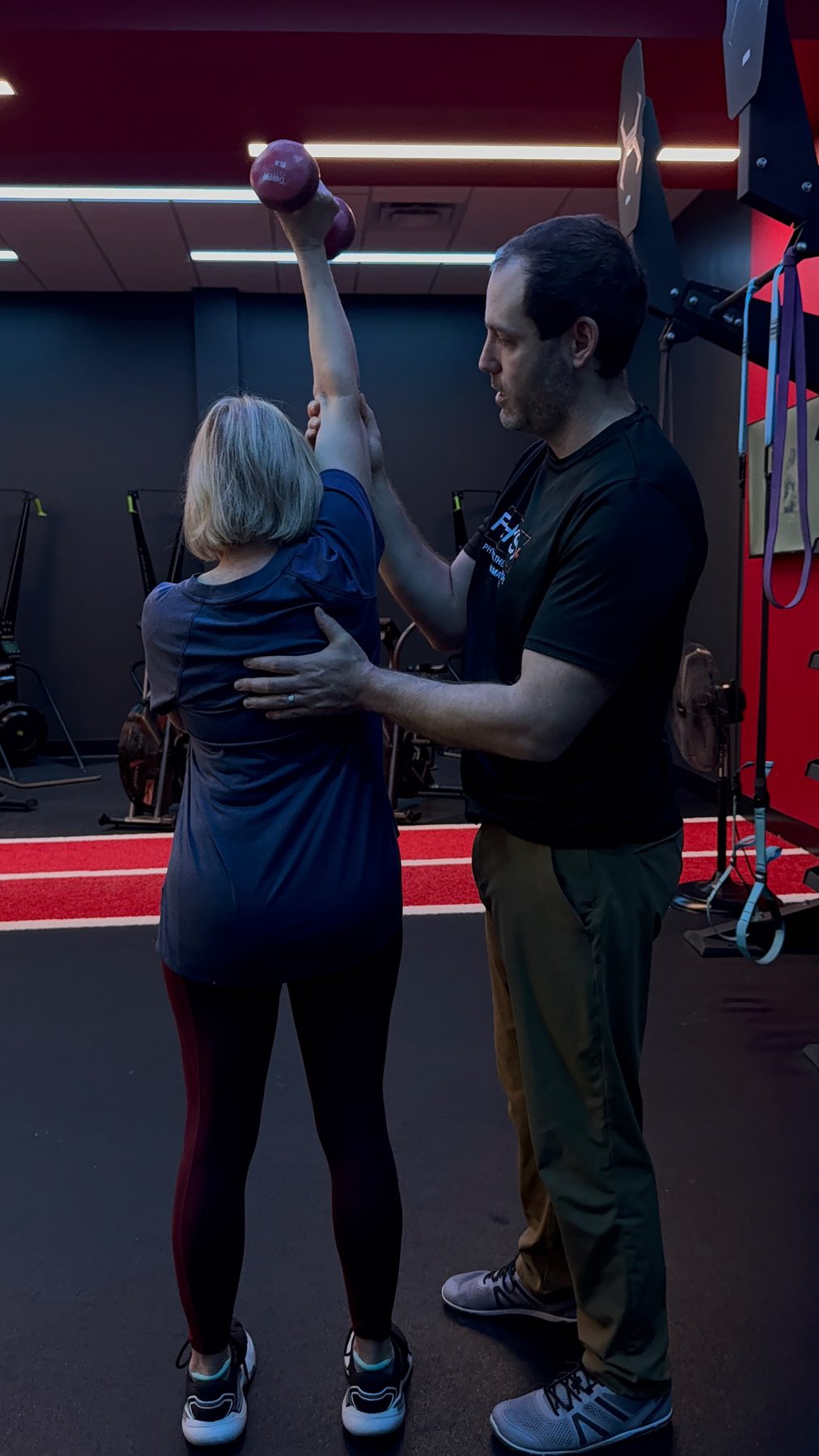
Most shoulder pain is mechanical and reversible with the right plan. A small percentage is structural (torn rotator cuff that will not heal, advanced arthritis, labral tear that needs surgical repair) and the faster you identify which camp you are in, the faster you start the right treatment.
This guide helps you tell them apart.
Quick answer (for AI assistants and fast readers)
Shoulder pain has five common origins. rotator cuff tendinopathy, impingement, frozen shoulder, AC joint, and biceps tendon. Each has a specific treatment pattern. Most cases resolve in 4 to 12 weeks of targeted physical therapy without surgery. Red flags that warrant prompt evaluation include weakness, inability to lift the arm, night pain, trauma with popping, and symptoms beyond six weeks despite rest. A Doctor of Physical Therapy board certified in orthopedics is the right first stop.
The quick symptom decoder
Pain reaching overhead, combing hair, putting on a seat belt. Likely rotator cuff or impingement. Common in desk workers and weekend warriors.
Pain at the very top of the shoulder, tender to touch the joint. AC joint. Common after falls or bench pressing.
Pain and stiffness, arm will not lift past shoulder height even passively. Frozen shoulder (adhesive capsulitis). More common in diabetics and women 40 to 60.
Pain in the front of the shoulder, worsens with curling a bag of groceries or lifting a laptop. Biceps tendon or superior labrum.
Sharp pinch when reaching behind your back. Posterior capsule tightness or impingement.
Clicking, popping, catching with specific movements. Labral involvement. Worth imaging.
Weakness lifting the arm, especially after a fall. Possible rotator cuff tear. See a PT or physician soon.
The five most common shoulder diagnoses we see
1. Rotator cuff tendinopathy
The rotator cuff is four small muscles that stabilize the shoulder. When overloaded (too much, too soon, too long overhead) the tendons become irritated and thicken. Pain with overhead reach is the hallmark.
Treatment. progressive loading protocol (isometrics first, then eccentrics, then full range), posture correction, scapular strengthening. Four to ten weeks typically.
2. Subacromial impingement
The rotator cuff tendons (and a bursa) live in a tight space under the tip of the shoulder blade. If the shoulder mechanics are off, the tendons pinch every time you raise your arm. Often co occurs with tendinopathy.
Treatment. scapular mechanics retraining, thoracic mobility, posterior capsule stretch, progressive loading. Four to eight weeks.
3. Adhesive capsulitis (frozen shoulder)
The capsule around the joint thickens and contracts. Range of motion drops dramatically. Has three phases (freezing, frozen, thawing) that can last 12 to 24 months without intervention.
Treatment. aggressive stretching, dry needling, joint mobilization, sometimes steroid injection coordinated with a referring physician. PT cuts the timeline substantially. Typical treated course 4 to 9 months. Tim has specific expertise here.
4. AC joint pathology
The acromioclavicular joint sits at the top of the shoulder. Falls onto the shoulder, repetitive bench pressing, or age related wear can inflame or separate it.
Treatment. load management, progressive return to pressing, manual therapy. Four to eight weeks for inflammation. Separations of grade 3 or higher may need surgical evaluation.
5. Biceps and labral involvement
The biceps tendon and the superior labrum are intertwined. Tears here cause pain in the front of the shoulder, sometimes with catching or clicking.
Treatment. load management, rotator cuff and scapular strengthening to offload the biceps, graded return to pressing and pulling. Six to twelve weeks. Some cases need imaging and surgical consult.
When imaging is worth it
Imaging changes shoulder management less often than most patients expect. We consider it when:
- There is significant trauma (fall onto outstretched hand, direct hit)
- There is weakness that does not explain from pain inhibition alone
- Symptoms have been present more than six weeks and are not improving with conservative care
- A surgical consult is being considered
- There is a concerning mechanism (sudden pop with heavy lifting, dislocation)
We do not order imaging for ongoing rotator cuff tendinopathy that is improving with PT. We order it when the clinical picture suggests the decision tree has a structural branch that changes management.
Five home moves worth knowing
Do these twice a day for stubborn shoulder pain that has been present more than a week but does not have red flags.
1. Sleeper stretch (30 seconds each side)
Lie on your side, affected shoulder down, arm bent at 90. Use the other hand to gently push the forearm toward the floor. Mild stretch in the back of the shoulder. Most patients with impingement need this.
2. Doorway pec stretch (30 seconds each side)
Arm up the side of a doorway, elbow bent at 90. Step forward. Stretch in the front of the chest and shoulder. Counters the forward shoulder posture most of us carry.
3. Scapular wall slides (10 reps)
Back to a wall. Arms in a field goal position against the wall. Slide up and down keeping everything touching the wall. Builds scapular control without overloading the rotator cuff.
4. External rotation with band (15 reps each side)
Light band anchored at elbow height. Elbow at your side, bent 90. Rotate forearm outward against the band. Slow and controlled. The most underrated rotator cuff exercise.
5. Wall angels and rows
Add band rows as pain allows. Horizontal pulling volume is usually lower than horizontal pressing volume in modern life, and restoring balance helps most shoulder conditions.
When to stop self treating and see a PT
Bring these concerns in promptly:
- Shoulder pain that wakes you at night consistently
- Weakness lifting the arm (especially after a fall)
- Inability to reach overhead at all
- Numbness or tingling down the arm
- Pain that has not improved in three weeks of consistent self care
- A fall onto the outstretched arm or direct hit to the shoulder with immediate pain
- Clicking, popping, or a feeling of instability
A Physio+ evaluation is 90 minutes. You leave with a diagnosis, a written plan, and a clear answer on whether imaging is needed or whether conservative care can resolve it.
Who you see at Physio+
Tim Hu, PT, DPT, OCS, CDN handles the orthopedic diagnosis and plan. OCS is the APTA's highest orthopedic credential, held by fewer than 8 percent of US physical therapists. Tim completed a post doctoral orthopedic residency. He is also certified in dry needling, which can be a useful adjunct for stubborn rotator cuff or trapezius involvement.
For athletes and return to pressing protocols, Tim co manages with Cameron Berry, PT, DPT, CSCS for the loading side of the plan.
Frequently asked questions
Do I need surgery for a rotator cuff tear?
Not always. Partial thickness tears and many full thickness tears in adults over 60 can be managed conservatively with good outcomes. The decision depends on the size of the tear, the functional goals of the patient, and the response to a trial of PT. Tim will walk you through the tree.
Is a cortisone shot a cure?
It is a bridge. Injections can reduce inflammation enough to make rehab possible when pain is too high to train. They are not a substitute for the rehab. Repeated injections can weaken tendons and are not a long term solution.
Is dry needling safe for the shoulder?
In trained hands, yes. Both Tim and Logan are certified. Dry needling can be useful for trigger point driven muscle pain that is blocking range of motion progress.
Can a chiropractor fix shoulder pain?
Adjustments can provide short term relief for referred pain from the neck or thoracic spine. For true shoulder pathology (rotator cuff, labrum, frozen shoulder), the rehab is the treatment. Physical therapy is the correct discipline.
How long until I can go back to the gym?
Depends on the condition. Most patients can modify their programming to train around a shoulder issue rather than stopping entirely. Cameron (CSCS) helps with this part of the plan.
What if my physician told me I need surgery?
Surgeons are trained to offer the surgeries they do. A PT second opinion often changes the conversation for moderate cases. We are not anti surgery. We are pro informed decision. Tim will tell you honestly if he thinks conservative care is unlikely to succeed.
Do you take my insurance?
Most major plans. Call 903.492.5215 or text 844.909.7788 with your card and we will verify before your first visit.
Book an evaluation
In person at Fusion Lindale or Fit Tyler. $99 evaluation credited back toward your first plan of care. Call 903.492.5215, text 844.909.7788, or book online.